Less than three months after Pearl Harbor, radar flagged something off the California coast and the guns opened up for an hour over a blacked-out city. The Army said 15 planes were up; the Navy said none. Decades later, the leading suspect was a stray weather balloon.
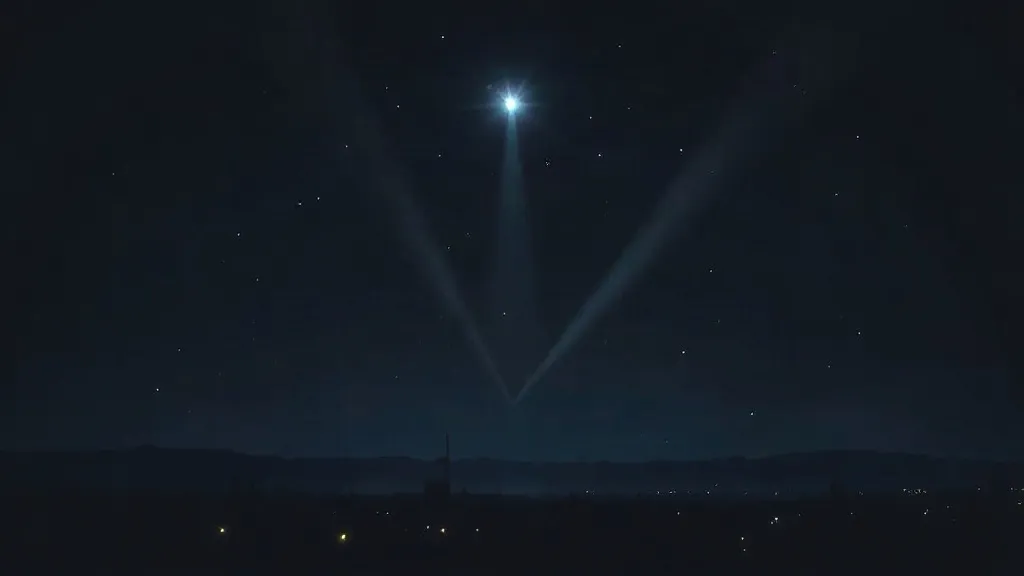
At roughly three in the morning on February 25, 1942, the sky over Los Angeles filled with searchlights and the crack of anti-aircraft fire. For more than an hour, gun crews ringing the city sent up around 1,400 shells at what they were certain was an enemy air raid. Windows shattered. Shrapnel rained on streets and rooftops. Five people died in the chaos on the ground. When the smoke cleared there was no wreckage, no downed plane, and no bomb crater. Nothing had been hit, because as far as anyone has ever proven, nothing was there.
The episode, later nicknamed the Battle of Los Angeles, is one of the most heavily documented “phantom” air raids in American history: a full military barrage aimed at a target that was never identified. It unfolded less than three months after Pearl Harbor, and decades later the U.S. Air Force’s own historians concluded the most likely trigger was mundane - a stray weather balloon, magnified by fear.
A city braced for attack
The panic was not irrational. On the night of February 23, 1942, a Japanese submarine had surfaced and shelled an oil facility near Santa Barbara, firing more than a dozen rounds at the California coast, according to HISTORY and the Los Angeles Almanac. It was the first attack on the U.S. mainland of the war, and it left Southern California primed for the worst. The next evening, naval intelligence warned that another strike could be coming.
So when radar picked up an unidentified object about 120 miles west of the city in the early hours of February 25, the response was immediate. Air-raid sirens sounded, a citywide blackout dropped, and just after 3 a.m. the coast artillery opened fire.
The night the guns opened up
Over the next hour, gunners expended more than 1,400 rounds of ammunition, the Los Angeles Almanac records, as searchlight crews swept the sky trying to hold a target in their beams. Witness accounts were all over the map - some described a single, slow, balloon-like object, others swore they saw formations of a dozen or more aircraft. No bombs ever fell. No attacker was ever brought down.
The only real damage was self-inflicted. Falling shell fragments smashed windows and buildings across the city. Of the five deaths attributed to the night, three came from car crashes in the darkened streets and two from heart attacks, according to HISTORY. It was, in every measurable sense, a battle fought against the sky itself.
What was actually up there
By daylight, the official story was already splitting in two. Secretary of the Navy Frank Knox told a press conference the whole thing had been a “false alarm” brought on by jittery nerves. Secretary of War Henry Stimson contradicted him within a day, saying as many as 15 planes may have been over the city, according to HISTORY. The two most senior defense officials in the country could not agree on whether anything had flown over Los Angeles at all.
The most careful reconstruction came 41 years later. In 1983, the U.S. Office of Air Force History concluded that meteorological balloons - released to measure wind, and fitted with lights and a silvery skin - had likely set off the initial alert, after which searchlights, smoke and shell bursts conjured the impression of an enemy fleet. The U.S. Coast Artillery Association’s own account, quoted by the Los Angeles Almanac, put it bluntly: a weather balloon “started all the shooting,” and “once the firing started, imagination created all kinds of targets in the sky and everyone joined in.”
That is the quiet lesson underneath the drama. It is a near-perfect illustration of how ordinary objects turn into UFO reports once fear and adrenaline take over: a real but harmless thing, seen in bad conditions, becomes a fleet of attackers in the retelling.
How a balloon became a UFO
The alien angle came much later. In 1942 the word “UFO” did not exist; it entered the language in the 1950s. Only after Kenneth Arnold’s 1947 sighting launched the modern flying-saucer era did writers begin reinterpreting the wartime barrage as a possible extraterrestrial craft, according to Discovery UK. The famous Los Angeles Times photograph, showing searchlights converging on a bright spot, is often held up as proof, but historians note the image was retouched for publication - routine darkroom practice at the time - which exaggerated the glowing “object” at its center.
What the Battle of Los Angeles actually preserves is not evidence of a visitor. It is an unusually complete case file on how a jittery city can manufacture an enemy overhead, the same misidentification machinery that the U.S. government would spend the next two decades studying through efforts like Project Blue Book. Ten years on, that machinery would fire again over the capital, when radar blips sent fighter jets scrambling over Washington in 1952. In Los Angeles, no craft was ever recovered and no cause was ever formally nailed down. But the record points firmly in one direction: on a terrified night in 1942, a city fired 1,400 shells at its own fear.