In April 1960, radio astronomer Frank Drake quietly aimed an 85-foot dish at two nearby Sun-like stars and tuned to the frequency of hydrogen, betting a civilization would broadcast there. He found silence - and invented modern SETI in the process.
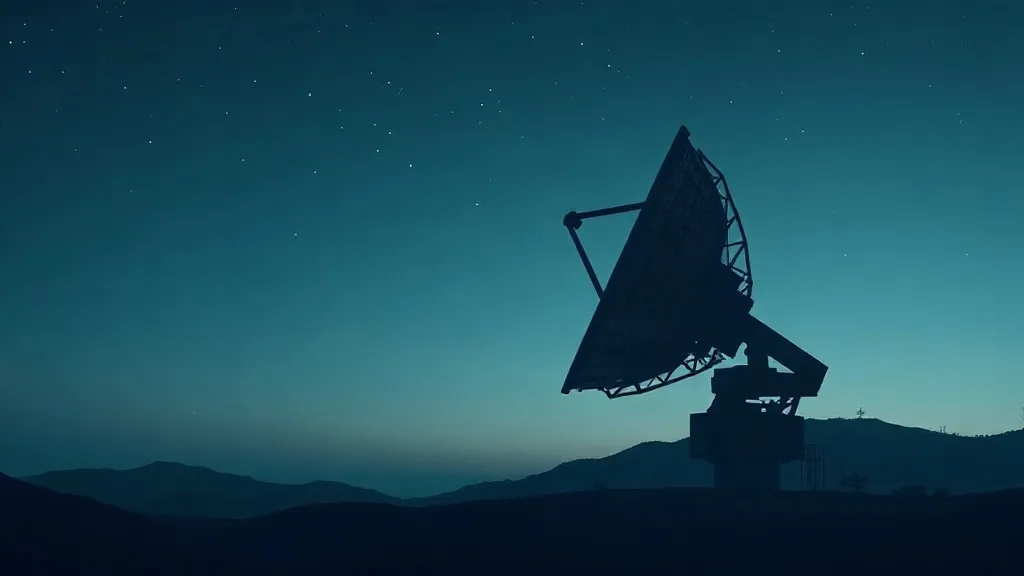
On a spring morning in 1960, a young radio astronomer climbed into the control room of a telescope in the hills of West Virginia, pointed its 85-foot dish at a single star, and did something no scientist had ever done on purpose: he listened for a message from another world.
His name was Frank Drake, and the experiment was called Project Ozma. According to the SETI Institute, it was the first modern scientific search for extraterrestrial intelligence - the moment the question “are we alone?” stopped being philosophy and became an experiment with a telescope, a frequency, and a target list. Over roughly 150 hours that spring and summer, Drake heard nothing from the stars. The one jolt of excitement he did get turned out to be a passing aircraft.
Two stars, one frequency, a borrowed telescope
Drake was working at the National Radio Astronomy Observatory in Green Bank, West Virginia. Beginning on April 8, 1960, he aimed the observatory’s 85-foot Howard E. Tatel Telescope at two nearby stars: Tau Ceti and Epsilon Eridani, both roughly 11 light-years away and both, like our Sun, the kind of steady star that could plausibly warm a life-bearing planet, per the SETI Institute.
The harder question was where to listen. Radio covers a vast range of frequencies, and scanning all of them at once would be like trying to hear one voice across every channel on the dial. Drake reasoned that a distant civilization would choose a frequency any radio astronomer in the galaxy would already know. His answer was 1420 megahertz - the 21-centimeter hydrogen line, the natural radio hum given off by the most common element in the universe. If hydrogen is the one landmark every technological species can find, he argued, it makes a natural meeting point, a kind of cosmic hailing frequency.
He named the project after Princess Ozma, ruler of L. Frank Baum’s fictional Land of Oz - a place, as Drake described it and the SETI Institute records, that was far away, hard to reach, and populated by exotic beings.
The first search, and the first false alarm
Almost as soon as Ozma began, it delivered a scare. Pointed at Epsilon Eridani, the receiver suddenly picked up a strong, pulsing signal. For a few electric moments the team wondered whether they had succeeded on the very first try. They had not. The signal behaved like something local, and it was later attributed to a passing aircraft, probably classified military equipment. Project Ozma thus earned an odd double distinction, as astronomy historians note: it was both the first SETI experiment and the first SETI false alarm.
After about 150 hours of observing between April and July 1960, the stars themselves stayed quiet. Drake detected nothing that looked like an engineered transmission. Judged only by whether it found aliens, Ozma failed.
Why a failure still changed science
Here is the part that lasted. Ozma was never really about those two stars - it was a proof of concept. Drake had shown that existing radio telescopes were already sensitive enough to detect a transmitter no more powerful than humanity’s own across light-years of space, and that a careful, testable search was possible at all. The search for other minds now had a method, not just a wish.
The idea spread quickly. In 1961, the year after Ozma, Drake convened a small meeting at Green Bank and, to organize the agenda, wrote down an equation estimating how many communicating civilizations might exist in our galaxy - now famous as the Drake Equation, according to the SETI Institute and HISTORY. Ozma also set the template for everything that followed, from the 1977 Wow! signal - a still-unexplained burst detected near the very hydrogen frequency Drake had chosen - to today’s surveys of millions of stars.
More than six decades later, no confirmed signal has ever arrived, and the deeper puzzle of why the galaxy seems so silent remains open. What Ozma settled was smaller but permanent: the search itself is real science, not fantasy. Drake, who died in 2022, spent the rest of his career on it. He later reflected that at the time few colleagues thought the question was worth a working astronomer’s hours. He aimed the dish anyway.