On a clear morning in suburban Melbourne, more than a hundred students and teachers watched a domed silver object sink behind the pines and, some say, land. Sixty years later, the tidiest explanation - a stray radiation-sampling balloon - still doesn't fit the wind.
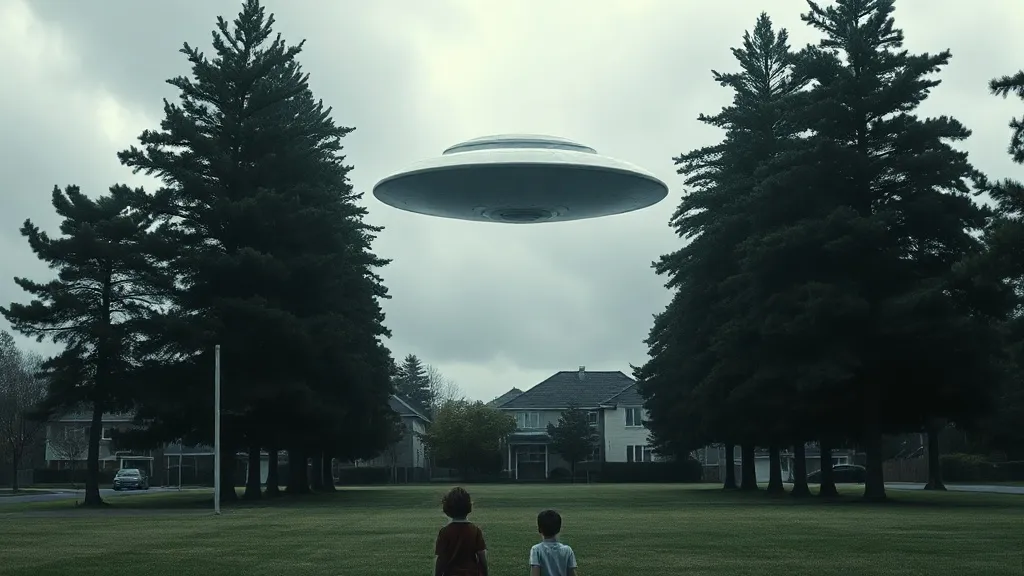
It was mid-morning at a suburban high school outside Melbourne when a games class stopped running. On 6 April 1966, more than a hundred students and staff at Westall High School - by many later accounts over 200 - stood on the oval and watched a grey-silver object, round with a domed top and roughly the size of a car, drift down behind a line of pine trees toward an open field. Some said it hovered. Some said it briefly touched down, then shot upward and was gone.
Sixty years later, the Westall incident is still officially unexplained - not because it is exotic, but because the most down-to-earth answer on offer has never quite fit. It remains one of the best-witnessed daylight UFO events anywhere on record.
What the witnesses actually reported
Accounts collected over the following decades agree on the broad shape and disagree on the details, which is itself telling. Most people described a single object; roughly one in five recalled up to three, according to an analysis published in The Conversation. Several remembered light aircraft in pursuit, a detail investigators have leaned on ever since.
Students who walked to the adjacent field, a patch of scrub known as The Grange, described one to three circles of flattened grass, variously called burnt, “boiled” or simply pressed down. On 9 April, air force personnel and UFO enthusiasts inspected the field and reported nothing unusual, according to the case record. The landowner then burned it off to keep sightseers away.
Many witnesses have also recalled being told, in the days afterward, not to talk about what they saw. As the State Library of Victoria notes in its account, students remember officials insisting there was nothing to discuss. Those recollections are vivid but undocumented, and that gap is where the argument lives.
The most likely earthly answer - and why it wobbles
The leading conventional explanation is a balloon. The day after the sighting, The Age reported that a weather balloon had gone up that morning from Laverton, to the west.
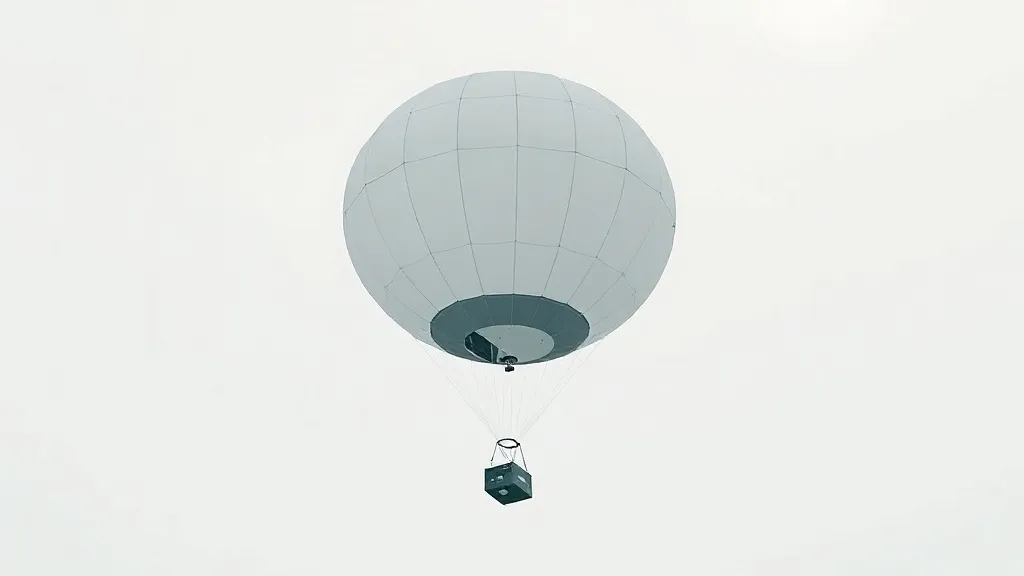
A stronger version came from researcher Keith Basterfield, who found archival records of HIBAL - a joint US-Australian program that flew large silvery balloons through the 1960s to sample radiation high in the atmosphere. A HIBAL balloon looked the part: pale and reflective, trailing a parachute and a small instrument package on a line. One launched from Mildura, the theory goes, drifted off course and came down near the school. To many skeptics, that neatly explains a slow, oddly moving silver shape - and even the “landing.”
 It is a good candidate. It is not a closed case. Shane Ryan, who has interviewed roughly 140 witnesses over two decades, argues the winds that morning would not have carried a Mildura or Laverton balloon to Clayton South. At the 60th anniversary in 2026, John Sutcliffe, described as one of the last surviving members of the 1966 Mildura HIBAL team, stated flatly that none of their balloons was involved. Skeptic Brian Dunning has offered a separate piece for the puzzle - that a towed target drogue, a windsock-like sleeve pulled behind a plane for others to chase, could account for the “pursuing” aircraft.
Why a schoolyard sighting still matters
Westall endures because it is a stress test for how we weigh testimony. This happened in daylight, in a suburb, in front of a crowd, which rules out the easy dismissals that make many reports simple to set aside - unlike the way ordinary objects come to look like craft at dusk, or the sensor puzzles that drive how scientists study UAP today. It sits alongside mass events like the 1997 Phoenix Lights as a case where the sheer number of witnesses is the evidence.
But numbers cut both ways. Systematic interviews did not begin until the early 2000s, nearly 40 years on. At the anniversary, researcher Richard Saunders argued that Westall is a textbook example of how shared memories can drift and reinforce one another over decades - “memory contagion” - so a crowd can end up more certain, and more uniform, than the original moment justified.
None of that settles what came down over Clayton South that morning. The City of Kingston has since built a children’s playground on the site, complete with a silver play-UFO and red slides, a civic wink at a mystery it never solved. The most honest verdict is the one the evidence supports: a large number of ordinary people saw something they could not identify, the tidiest explanation still has loose ends, and after sixty years the file stays open.