Astronomers, Pentagon analysts and aviation experts keep resolving UFO reports to the same short list: a bright planet, a satellite flare, a flickering bird, and the limits of human vision. Here is how they fool even trained observers - and how investigators tell them apart.
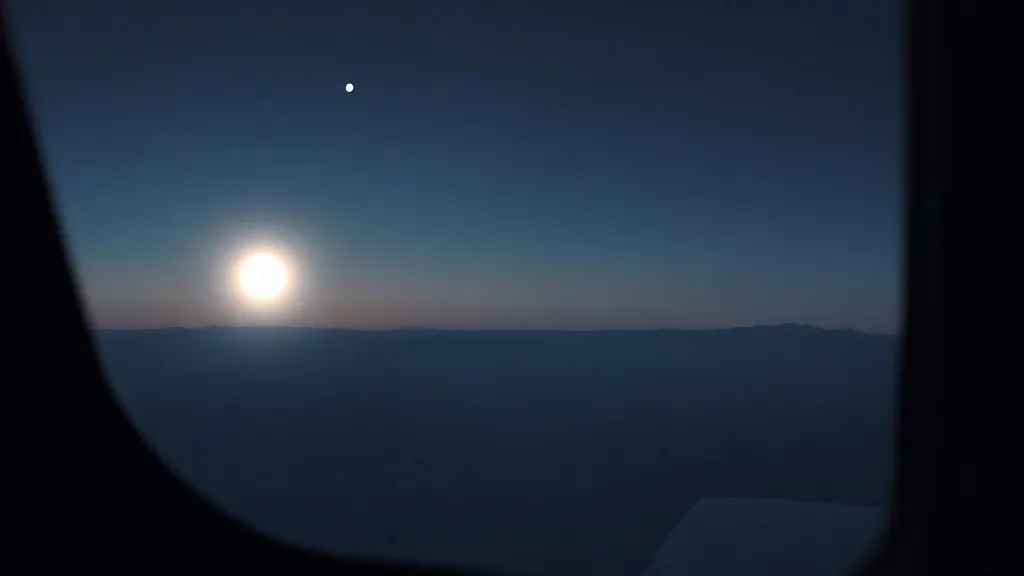
Shortly after 5 a.m., a Cessna pilot with 4,000 hours in his logbook climbed toward a brilliant light in the sky, certain he was closing on a UFO. The light would not let him catch it. “When we flew directly toward it, it backed off, decreasing in size until it was only about the size of the head of a pencil,” he reported. The object he was chasing was the planet Venus.
That chase, documented in the U.S. Air Force-funded Condon study at the University of Colorado, captures something investigators rediscover in every era of UFO research: the single object most often reported as a UFO is not exotic at all. Astronomers have long identified Venus - the brightest thing in the sky after the Sun and Moon - as the most common culprit. Add satellites, drones, balloons, birds and a few well-understood quirks of human vision, and you can account for the large majority of sightings that ever get solved.
None of this proves every report has a mundane cause. It explains why a single report, on its own, is weak evidence - and why serious researchers now care more about instruments than anecdotes.
Why a planet can pass for a craft
Venus is bright enough to be seen in a light-polluted city and to shine through twilight, when few other points of light are visible. Near the horizon its light passes through a thick, turbulent slice of atmosphere, which can make it flicker, shift color, and appear to swell. Seen against a featureless sky with no reference points, the human eye has almost nothing to judge distance or size against.
The Condon investigators were blunt about the lesson. The case, they wrote, “illuminates the inadequacy of current education regarding fundamental astronomy and atmospheric physics.” Suggestion, fatigue and a bright planet low in the haze were enough to turn a routine dawn sky into an aerial pursuit.
The eye that invents motion
The strangest ingredient is one most people have never heard of. Place a single fixed point of light in an otherwise dark field, and after a few seconds it will appear to drift, wander, or dart on its own. Psychologists call it the autokinetic effect. Because we sense motion relative to surrounding reference points, a lone light in the dark leaves the brain with nothing to anchor to, so it manufactures movement that is not there.
It is not a fringe idea. According to aviation-safety references, the U.S. Navy began studying the effect in 1945 to explain disorientation reported by pilots, and night-fighter crews in World War II repeatedly gave chase to stars they had mistaken for enemy aircraft lights. Tellingly, several people watching the same star at once will report it moving in different directions - proof the motion is in the observer, not the sky. That single mechanism can transform a stationary planet into a craft that “followed the car” or “shot away.”
The Pentagon’s short list
Modern government data tells the same story with better sensors. In its recent annual reports on unidentified anomalous phenomena, the Pentagon’s All-domain Anomaly Resolution Office (AARO) says it has resolved hundreds of cases to commonplace objects: balloons, birds, drones, satellites and aircraft. Some clusters of “flashing lights” turned out to correlate in time and direction with SpaceX Starlink satellite launches, according to AARO. Birds, meanwhile, often register on infrared video as a flickering blob, an artifact of image compression that mimics a pulsing object.
Only after those ordinary explanations are ruled out do analysts look for the genuinely puzzling behavior captured in the five observables the Pentagon uses to flag truly anomalous cases - things like sudden acceleration with no visible means of propulsion. AARO reports it has found no evidence of extraterrestrial technology in the cases it has reviewed.
What is left, and why it matters
A residue of cases does survive scrutiny. But in almost every instance, what makes them “unexplained” is not a documented impossibility - it is missing or low-quality data. When NASA’s independent UAP study team published its final report in 2023, its central finding was not about any object. It was that “scientists do not presently have the body of data needed to make definitive scientific conclusions about UAP.” Most footage is opportunistic: a single cockpit camera or ship sensor, uncalibrated, with no corroborating instrument.
That is the honest takeaway from decades of misidentification. Knowing that Venus, a satellite flare or the eye’s own tricks explain so much does not close the subject - it sharpens it. It is why researchers building rigorous, instrument-based UAP science argue the path forward is better sensors, not better stories. The reports that matter most are the ones that a bright planet, a passing satellite and a tired observer cannot explain away.