For decades, sightings clustered near bases and nuclear sites fed a theory that something is monitoring our weapons. NASA's 2023 study team found the pattern mostly reflects where the cameras, radars, and trained observers are - a reporting bias, not a beacon.
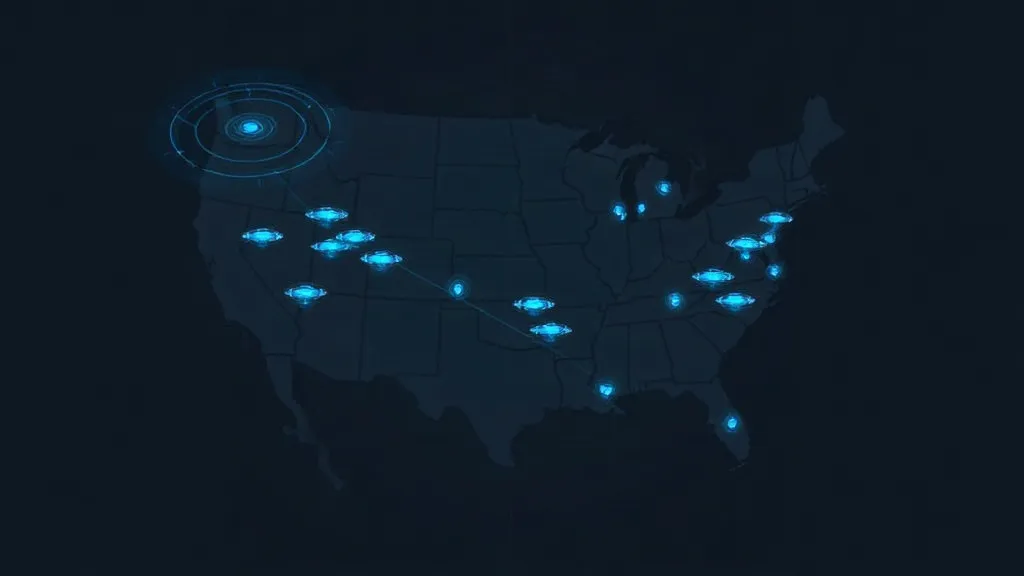
Plot every American UFO report on a map and a pattern jumps out. The dots crowd the deserts of the Southwest, the training ranges off both coasts, and the lonely missile fields of the northern plains. For decades that shape has fed an unsettling idea: that whatever these objects are, they seem drawn to our most sensitive military and nuclear sites.
There is a quieter explanation, and it comes from NASA. In 2023, the agency’s independent study team - 16 scientists asked to examine unidentified anomalous phenomena, or UAP, the government’s term for UFOs - reached a blunt conclusion about that map. The clustering, they wrote, mostly reflects where the cameras, radars, and trained observers happen to be. It is a bias in the data, not a message in the sky.
A map of watchers, not visitors
“Most reports still reflect a bias towards restricted military airspace, a result of reporting from military personnel and sensors present in such areas,” NASA’s panel stated in its September 2023 final report. In plain terms: the places that generate the most sightings are the places most densely wired with high-end sensors and staffed by people whose job includes reporting anything unusual.
This is a textbook case of selection bias - when the way you gather data quietly shapes what you find. A fighter jet carries an advanced infrared targeting pod. A carrier group is ringed by radar. Aircrews operate under clear orders to log unknown contacts, and since 2022 they have had a formal Pentagon channel to do it. A hiker who sees the same light has no sensor, no reporting line, and every reason to stay quiet. The sky over a bombing range is not busier with anomalies; it is simply watched far more closely - which is why researchers who study these sightings rigorously start with the quality of the data before the identity of the object.
The nuclear connection, re-examined
The most dramatic version of the pattern is the so-called nuclear connection. Researchers such as Robert Hastings have collected testimony from scores of military veterans describing UFOs near weapons sites, and some episodes are firmly on the record. In 1967, a flight of Minuteman nuclear missiles at Malmstrom Air Force Base in Montana dropped offline in incidents that some personnel tied to strange objects seen overhead. The Air Force attributed the shutdowns to electronics faults; witnesses who were there have long disputed that account.
Cases like that deserve to be taken seriously rather than waved away. But they also sit exactly where selection bias predicts the most reports. Nuclear and military sites have the tightest security, the most surveillance, and the most cleared personnel required to document what they see. If unexplained things are being reported anywhere, they will be reported there first - whether or not anything is unusually interested in the base. A correlation with sensitive sites is precisely what the reporting system is built to produce.
The test is already running
There is a way to check the bias explanation, and it is happening now. If sightings truly track where the instruments and observers are, then adding new observers in new places should spread the map out. That is what NASA reported: the military-airspace skew “has been lessened by reporting from commercial pilots showing a more diverse geographic distribution of UAP sightings across the United States.”
The mundane resolutions point the same way. The Pentagon’s UAP office, known as AARO, says the cases it can close come back as balloons, birds, satellites, drones, aircraft, and the occasional oddity like a rocket launch or a jet pack. Its 2025 annual report logged 319 new cases and attributed 114 of them to such ordinary sources, with most of the remainder simply lacking the data to decide either way.
None of this proves every base sighting is prosaic. Some are not. In late 2023, swarms of unidentified drones repeatedly crossed Langley Air Force Base in Virginia for weeks, and officials still cannot say with confidence what all of them were. The honest reading is narrow but important: observational bias explains the shape of the map, not the contents of every dot on it.
Why the distinction matters
The difference is not academic. If UFO reports cluster near bases because objects are interested in our weapons, that is a national-security story with a clear adversary to find. If they cluster there because that is where the sensors are, the priority is different: build calibrated instruments in more places, widen who is able to report, and let a fuller map replace a suggestive one. NASA’s panel argued for exactly that. The genuinely unexplained cases, on this reading, will not be found by staring harder at the old pattern. They will be found by fixing the lens that produced it.