A former senior Pentagon official says UAP incursions over military bases and warships are happening hundreds of times a year - and commanders still have no answers. The Langley Air Force Base case forced a fighter jet squadron to relocate.
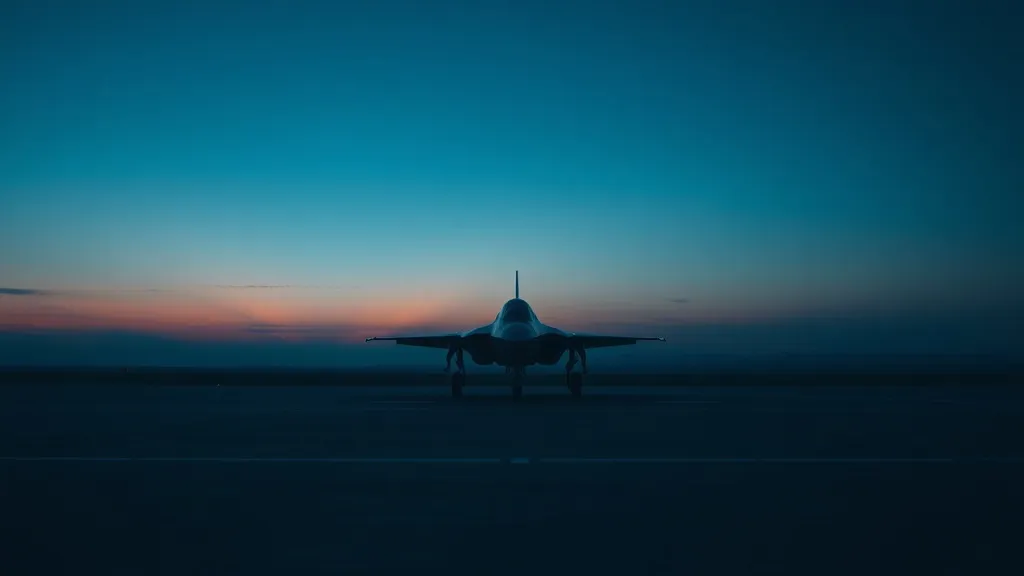
For 17 consecutive days in late 2023, unidentified aircraft occupied restricted airspace above Langley Air Force Base in Virginia - one of the most strategically sensitive military installations on the Eastern Seaboard, home to Air Combat Command. They could not be identified. They could not be expelled. And eventually, according to former senior defense official Christopher Mellon, commanders made an extraordinary decision: move the F-22 Raptor fighter jets elsewhere.
That episode is now at the center of a broader public reckoning. Speaking at the June 2026 UAP Disclosure Forum in Washington D.C. and in subsequent media appearances, Mellon - a former Deputy Assistant Secretary of Defense for Intelligence - described the Langley case not as an isolated incident but as a concrete illustration of a pattern he says is common, documented, and largely unacknowledged.
“If the air combat command at Langley can’t control its own airspace,” Mellon told reporters, “then you wonder how effectively they could protect Washington.”
Seventeen Days Over Langley
The Langley Air Force Base incursion became public knowledge in late 2023, when the Pentagon confirmed that unidentified aircraft had repeatedly penetrated its restricted airspace over a roughly two-week period. The intrusions were persistent and sustained enough that officials chose to relocate an F-22 squadron - a decision that speaks both to the disruption caused and to the inability to resolve the situation by other means.
The Pentagon offered no public explanation of what the objects were, where they came from, or why standard air-defense measures proved ineffective against them. The case was logged; the mystery remained open.
Mellon has returned to Langley repeatedly in his public advocacy because it is one of the few well-documented cases where the consequences were measurable and concrete. He estimates that hundreds of similarly unexplained encounters occur every year at U.S. military installations around the world, and that most never become public. Local commanders, he argues, often lack the authority or the framework to escalate such reports in a way that reaches decision-makers.
Provocation at Sea
The incursions at air bases are one part of a wider pattern Mellon has outlined. At sea, he says, the behavior has at times been more directly provocative.
In documented incidents involving U.S. Navy ships, unidentified objects reportedly approached vessels to within bridge-level proximity. In at least one case Mellon has described publicly, an object shone lights directly at the crew - an action he characterizes as deliberate rather than accidental.
“Some objects were deliberately trying to provoke us,” he told the June 2026 forum. “It’s happened with our navy ships at sea.”
Mellon has been careful not to assert a specific origin for the objects in these encounters. What he argues is that the behavior itself - persistent, targeted, and occurring near the most sensitive military assets the U.S. operates - warrants a level of institutional seriousness that has not, in his assessment, been brought to bear.
What AARO’s Numbers Show
The Pentagon’s All-domain Anomaly Resolution Office - known as AARO, the government body established by Congress to investigate UAP - has been systematically collecting and analyzing reports since its creation in 2022. According to a summary published by AARO director Dr. Jon Kosloski in June 2026, roughly 40% of reported cases remain unresolved. That means no conventional explanation - drones, weather balloons, aircraft misidentifications - has been found for a substantial fraction of what the military is seeing.
That figure does not imply the unresolved cases involve anything extraordinary. AARO itself notes that most UAP reports ultimately receive mundane explanations once sufficient data is gathered. But it does confirm that the government’s own tracking system is encountering a significant volume of incidents it cannot close.
The Air Force, notably, has remained largely absent from the public UAP discussion - a gap that analysts at The Debrief and elsewhere have flagged with concern, given that many of the most documented incursions have occurred at Air Force installations.
The House Oversight Committee has scheduled a UAP hearing for July 26, 2026, at which additional testimony about military encounters is expected. For Mellon, the goal is straightforward: place the documented evidence in front of the people with the authority to act on it, before the next unidentified object parks itself above another runway.