The Wow! signal hit the exact frequency scientists predicted alien civilizations would broadcast on, was 30 times louder than everything around it, and has never repeated. Here is what scientists actually know.
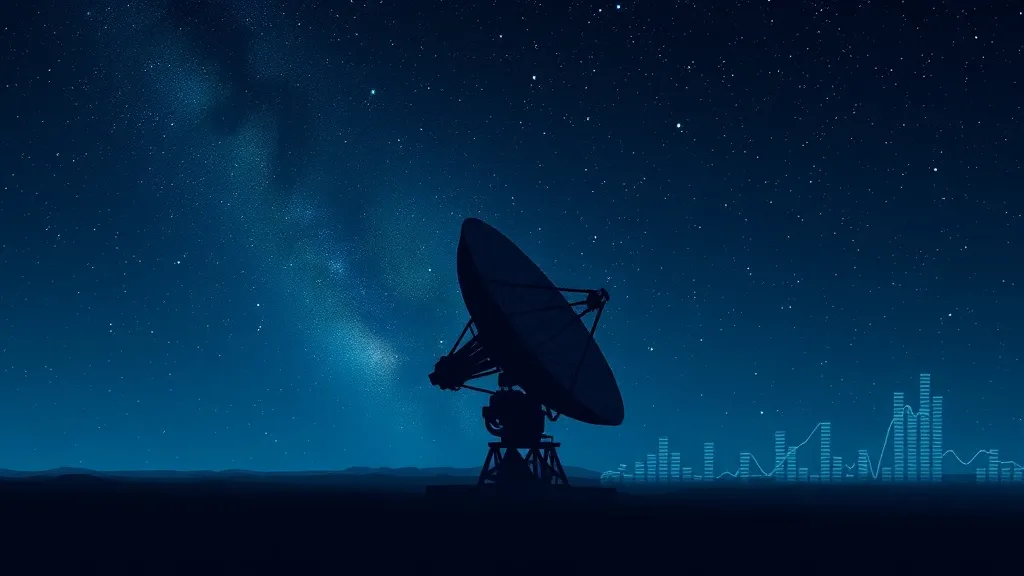
On August 17, 1977, a volunteer astronomer at Ohio State University sat down to review a paper printout from the Big Ear radio telescope - a sprawling structure in the fields of Delaware, Ohio, that had been quietly scanning the sky since 1963. Flipping through the routine data from two days earlier, he came to a column of numbers and letters that made no sense by any normal measure. The signal was so intense it exceeded the printout’s scale. He circled it in red ink and wrote a single word in the margin.
“Wow!”
That six-character annotation gave the most famous anomaly in the history of the Search for Extraterrestrial Intelligence its name. The signal had lasted 72 seconds. It has never been detected again. And nearly 50 years later, no one can fully explain what Big Ear picked up on the morning of August 15, 1977.
A Signal That Ticked Every Box
The Wow! signal was not just unusually strong - it was strange in exactly the ways SETI scientists had predicted a genuine anomaly would be.
It arrived on a frequency of 1,420 megahertz, the natural emission frequency of neutral hydrogen atoms. Hydrogen is the most abundant element in the universe, which is why SETI researchers long ago identified 1,420 MHz as a likely “cosmic watering hole” - a channel that any space-faring species would know to monitor, because the laws of physics are the same everywhere. Scientists searching for signals from other civilizations had argued for decades that this was the frequency to listen on.
The signal was 30 times more intense than the background radio noise around it - a dramatic spike by the standards of radio astronomy. It was also narrowband, meaning its energy was concentrated in a tight slice of the radio spectrum. Natural astrophysical sources such as pulsars and quasars typically radiate across a wide range of frequencies. A narrowband signal at the hydrogen line is precisely the profile SETI researchers had flagged as potentially artificial.
The signal appeared to originate from a direction near the constellation Sagittarius. The 72-second duration was not a property of the signal itself but of Big Ear’s observation window - the telescope swept past that patch of sky in exactly 72 seconds, so the transmission may have continued longer. How much longer is unknown. Jerry Ehman, the astronomer who found it, later said it was among the most consistent detections he had ever reviewed, according to National Geographic.
The Silence That Followed
What made the Wow! signal haunting was what came next: nothing.
Big Ear returned to the same coordinates the following night. Then again. For the remaining 21 years of the telescope’s operation - it was demolished in 1998 - it never detected the signal a second time. Other radio telescopes have pointed at the same region of sky at various times since then. No repeat has ever been recorded.
In 2022, astronomers at Breakthrough Listen - the largest privately funded SETI program in history - conducted a targeted follow-up using two of the world’s most capable radio telescopes: the Green Bank Telescope in West Virginia and the Allen Telescope Array in California. They observed a Sun-like star called 2MASS 19281982-2640123, located 1,788 light-years away in the direction of the original signal, which a 2022 study had identified as a plausible candidate source. According to the Berkeley SETI Research Center, no technosignature candidates were found. The star was not ruled out - just moved lower on the probability list.
The Best Current Theory - and Why It Is Not Settled
In 2024, a team led by Abel Méndez, director of the Planetary Habitability Laboratory at the University of Puerto Rico, offered the most detailed natural explanation attempted yet. Working with Kevin Ortiz Ceballos, an astrophysicist affiliated with the Harvard-Smithsonian Center for Astrophysics, the team analyzed archived Arecibo Observatory data and found eight signals sharing characteristics with the original Wow! detection.
Their proposed mechanism: a flare from a magnetar - a neutron star with a magnetic field roughly a million times stronger than a typical pulsar’s - struck a cold cloud of interstellar hydrogen gas. The energy of that collision could cause the cloud to briefly emit an intense burst of radio waves at exactly 1,420 MHz, through a process called stimulated emission, sometimes described as a natural hydrogen maser. The result, the researchers argue, would look almost identical to what Big Ear recorded.
A second study, published as a preprint in 2025, went back further - to previously unpublished data from Big Ear’s own archived observations - and revised the original signal’s estimated sky position and properties. According to arXiv, the analysis used roughly 45,000 archival Big Ear observations not included in the original 1977 report.
Both papers are preprints: they have not yet completed peer review, as Scientific American reported. Researchers outside the project have noted that the proposed magnetar-maser mechanism, while theoretically plausible, has never been directly observed in nature. Human-made radio frequency interference also remains a possibility that cannot be entirely excluded for a one-time detection from nearly five decades ago. The honest scientific position, as Méndez himself put it, is that these results “don’t solve the mystery of the Wow! Signal, but they give us the clearest picture yet of what it was and where it came from.”
The signal was real. It was anomalous. Its source remains unknown.
Why This Still Matters
The Wow! signal sits at the center of a question SETI science has wrestled with ever since: what would a genuine signal from another civilization actually look like? And what evidence standard would be enough to say we found one?
The 1977 detection set an implicit bar: a signal repeatable enough to exclude one-time events, confirmed by independent instruments, with every natural explanation systematically eliminated. The Wow! signal has cleared none of those bars after 47 years. That is not a reason to dismiss it as noise. It is a reason to keep the question open - and to keep listening.