From 1947 to 1969, the US Air Force ran its longest official inquiry into unidentified flying objects. It reviewed thousands of sightings, explained most - and quietly classified 701 as things it simply could not resolve.
On April 24, 1964, a New Mexico police officer named Lonnie Zamora watched an object with what appeared to be landing legs descend into a dry gulch outside Socorro. He reported seeing two small figures in white near the craft. There was a roar, a blue-orange flame, and then silence. When he reached the site minutes later, he found scorched desert brush, four indentations pressed into the ground in the pattern of landing pads, and patches of fused sand.
The Air Force sent investigators. They spent weeks on the case, checking every plausible explanation. When they were done, the last commanding officer of the program called it the single best-documented case in the investigation’s entire 22-year run.
The Socorro case is still classified as “unidentified.”
Before Blue Book: A Classified Conclusion That Was Burned
The investigation began in December 1947, when the Air Force launched a classified program called Project Sign - prompted in part by pilot Kenneth Arnold’s famous report of crescent-shaped objects near Mount Rainier that summer. By late 1948, Project Sign’s investigators had reached a conclusion they put in writing. According to Captain Edward Ruppelt, who later led Blue Book and described the episode in his 1956 memoir, the team concluded that the objects were real, performed maneuvers beyond known aircraft, and were most probably interplanetary in origin. The document was called the “Estimate of the Situation.”
Air Force Chief of Staff Hoyt Vandenberg rejected it. He ordered it destroyed. No confirmed surviving copy has ever surfaced - the account rests on Ruppelt’s testimony and the statements of others who said they had seen it.
Project Sign became Project Grudge in 1949, and then, in March 1952, Project Blue Book - headquartered at Wright-Patterson Air Force Base in Ohio, where it would operate for the next 17 years.
What 22 Years of Investigation Looked Like
Between 1952 and its official closure on December 17, 1969, Project Blue Book logged 12,618 UFO reports submitted by military and civilian witnesses across the United States. Its staff - generally a small team of Air Force officers and civilian analysts - examined each one, cross-checking against planets misidentified in the sky, weather balloons, experimental aircraft, atmospheric phenomena, and ordinary aircraft seen at unusual angles.
The program’s most important scientific figure was Dr. J. Allen Hynek, an astrophysicist from Ohio State University who served as Blue Book’s civilian consultant from its earliest days. Hynek started as a skeptic - his job was largely to find conventional explanations for sightings. Over time, he grew uncomfortable with what he came to see as pressure to close cases quickly rather than investigate them rigorously.
In 1953, a CIA-sponsored review called the Robertson Panel evaluated Blue Book’s most compelling cases over four days. Its key recommendation was a public education campaign to reduce the “aura of mystery” around sightings - not because the cases were explained, but because officials worried that a surge of UFO calls could overwhelm military communications during a Soviet attack. The concern was panic management, not the phenomenon itself.
The 701 That Defied Explanation
The vast majority of Blue Book cases were eventually attributed to conventional sources. But 701 reports - roughly one in every 18 - resisted every explanation the investigators could find. These were not cases of insufficient data that were left open by default. They were cases that received serious analysis and still could not be attributed to any known phenomenon.
The program came under sharp public scrutiny in 1966, after an Air Force consultant attributed a wave of Michigan sightings to “swamp gas” - a conclusion that struck many witnesses and observers as dismissive. The backlash, which included calls for a congressional inquiry from then-Representative Gerald Ford, led the Air Force to commission an independent scientific study at the University of Colorado led by physicist Edward Condon.
The Condon Report, published in 1968, concluded that 22 years of investigation had not produced evidence of extraterrestrial visitation and that further study was unlikely to yield significant scientific results. The National Academy of Sciences reviewed the report and agreed with its findings. On December 17, 1969, the Air Force shut Project Blue Book down.
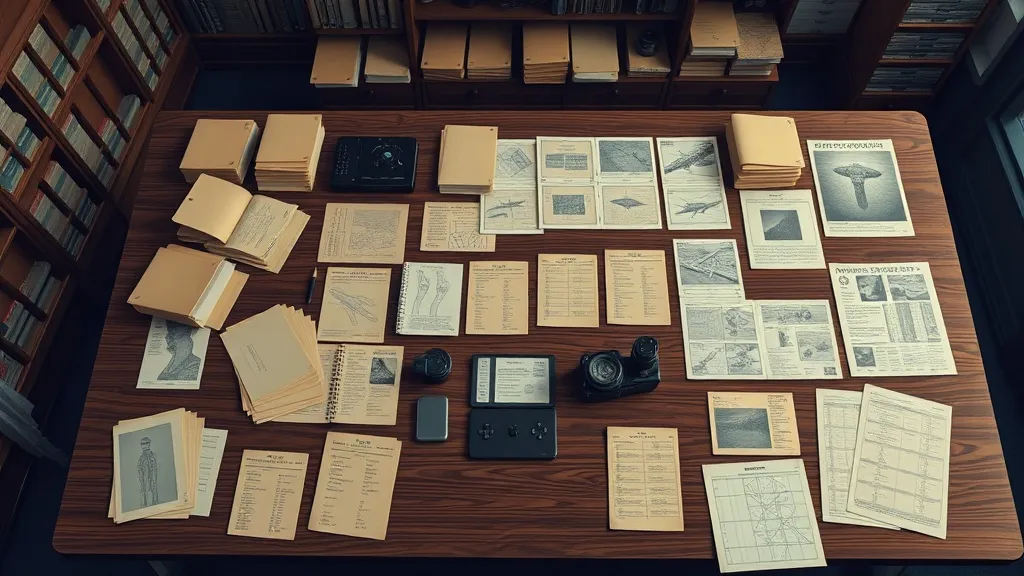
The case files - 37 cubic feet of reports arranged chronologically, covering two decades of sightings - were transferred to the National Archives in Washington, DC in 1976, where they remain available for public research today.
Why the 701 Still Matter
Project Blue Book’s official conclusions stand: no case proved a threat to national security, and no case proved extraterrestrial origin. Those are narrow claims - and they leave considerable room for the genuinely puzzling.
Hynek, who spent 17 years watching Blue Book from the inside, grew more candid after it closed. He coined the term “close encounters” and founded the Center for UFO Studies, arguing that the program had been designed to manage public perception as much as to investigate unknown phenomena.
Today, the government’s PURSUE disclosure project has released over 150 declassified UAP records since May 2026. The Pentagon’s All-domain Anomaly Resolution Office (AARO) is tracking more than 2,000 active cases, with roughly 40% still unresolved. The technology has improved enormously since 1969: better sensors, better cameras, better data.
The core pattern has not changed. Blue Book’s 701 are a documented record of cases the US government, after serious investigation, could not explain. The original files at the National Archives are open to the public. No clearance required.