As the Pentagon posts batch after batch of declassified UFO files in 2026, it is worth recalling that Washington's first serious UFO review did the opposite - a CIA-convened panel of top scientists urged a public 'debunking' campaign and surveillance of civilian UFO groups.
In 2026, the U.S. government’s answer to the UFO question is a website. Batch after batch of once-classified files now lands on the Pentagon’s public UAP page for anyone to read. Seventy-three years ago, when Washington first sat down to take the subject seriously, it reached almost the opposite conclusion.
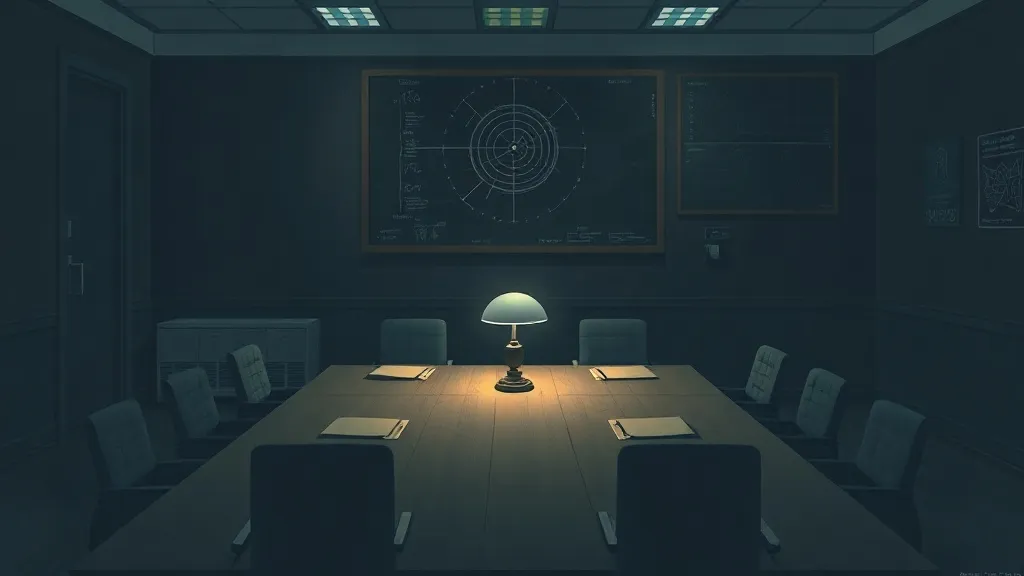
In January 1953, a small panel of the country’s most respected scientists met in secret at the request of the Central Intelligence Agency. Over four days they reviewed the best available sighting reports, then wrote down what the government should do about them. Their recommendation was not to investigate harder. It was to talk the public out of caring - and to keep an eye on the civilian groups that would not stop looking up.
That group is remembered as the Robertson Panel, and according to a declassified CIA history written by agency historian Gerald Haines, it shaped how Washington publicly handled UFOs for years.
What five scientists were asked to decide
The panel did not come out of nowhere. In the summer of 1952, a wave of sightings swept the country, and it peaked in the capital itself: on two July weekends, radar operators tracked unexplained blips over Washington while jets scrambled to chase them. You can read the full account of that radar panic over the capital - it rattled the Truman administration enough that the CIA decided the phenomenon needed a hard scientific look.
The Agency assembled a panel under Howard P. Robertson, a Caltech physicist and defense consultant. Around the table sat some of the era’s heavyweights, including Luis Alvarez, a radar expert who would later win a Nobel Prize, and physicists Samuel Goudsmit and Lloyd Berkner. J. Allen Hynek, the astronomer who advised the Air Force’s UFO project, attended as a consultant.
Their brief was narrow: look at the evidence and judge whether flying saucers were a threat. They met from January 14 to 18, 1953, and spent only about 12 hours on the actual cases, a detail skeptics and believers alike have pointed to ever since.
The recommendation that aged badly
The panel’s core finding was measured, and it has largely held up: it found “no evidence of a direct threat to national security” in the objects being reported, and judged that most sightings could be explained as ordinary things seen under unusual conditions.
But the scientists flagged an indirect danger. A flood of public reports, they warned, could clog military communication channels at exactly the wrong moment and leave the country vulnerable to panic or to an enemy hiding a real attack in the noise.
Their fix is the part that still stings. The panel recommended a public “debunking” campaign, using television, motion pictures and popular articles to walk citizens through cases that looked mysterious at first and turned out to be mundane. The goal, in plain terms, was to make people less interested in UFOs. The report even floated Disney and mass-media figures as vehicles.
It went further. The panel suggested that civilian UFO organizations “should be watched,” citing “their potentially great influence on mass thinking.” Two named groups were early versions of the amateur networks that would define UFO research for decades. In effect, a secret government panel recommended surveillance of hobbyists for the thoughts they might spread.
Haines writes that the panel’s stance pushed the Air Force’s public UFO effort toward reassurance rather than open inquiry. It is part of the backstory to Project Blue Book, the long-running Air Force study that critics later accused of explaining cases away rather than examining them.
Why it still matters in 2026
The Robertson Panel report was stamped Secret. Edward Ruppelt’s 1956 memoir first hinted the meeting had happened; the Air Force released a few summary paragraphs and the members’ names in 1958, and a fuller version did not surface until the mid-1960s. For years, the public did not know the review existed, let alone what it advised.
That secrecy is the through-line to today. Researchers have long argued that official dismissiveness, seeded in part by this panel, is why serious scientists avoided the subject for a generation - the story of how the stigma took hold and why it is only now loosening.
A caveat is worth keeping. The panel members were not conspirators; they were Cold War scientists genuinely worried about air-defense overload during a tense standoff, and their factual conclusion - no proven threat, most cases explainable - matches what modern reviews still find. What has changed is the instinct. In 1953, the reflex was to quiet the conversation. In 2026, with declassified files posting to a public server and Congress pressing for more, the reflex has flipped toward disclosure. The evidence has not resolved the mystery. But the government’s chosen response to it looks nothing like the one five scientists wrote down in a closed room in January 1953.