A radar 'solid return' feels like proof - a machine saw it, not a nervous pilot. But the atmosphere can bend a radar beam into a phantom, and telling a real UAP from a ghost comes down to one rule investigators live by.
When a fighter pilot says they saw something impossible, you can wonder if they were tired, or fooled by a bright planet, or simply mistaken. When a radar screen paints the same object, that doubt is harder to hold. A radar return feels like testimony from a machine that does not get nervous, does not blink, and does not want the story to be true.
That instinct is why radar sits at the center of the most serious cases of unidentified anomalous phenomena, or UAP - the term governments now use for what the public still calls UFOs. It is also why radar deserves a careful look, because the same instrument that makes a case feel solid can, under the wrong conditions, invent an object out of thin air. The short version: radar is powerful evidence precisely because it is objective, but it is not infallible, and knowing how it fails is how investigators separate a real anomaly from a ghost.
How a machine ‘sees’ something in the sky
Radar does something your eyes cannot. It sends out a pulse of radio waves, then falls silent and listens for the faint echo bouncing back off whatever the pulse hit. Because radio travels at the speed of light, the delay before the echo returns gives the object’s distance with real precision, and the way the echo’s frequency is stretched or squeezed - the Doppler shift - reveals how fast the target is moving toward or away. According to NOAA, which runs the United States weather radar network, a radar spends the overwhelming majority of its time listening rather than transmitting.
That is the appeal. Radar hands investigators numbers a startled human never can: an altitude, a speed, a track across the sky. When those numbers describe an object holding still against a strong wind, or accelerating in a way no known aircraft can, the case stops being a story and starts being data. This is exactly why radar counts as one of the five observables the Pentagon uses to flag a genuine UAP, and why it carries more weight than a single grainy video.
When the sky plays tricks on the beam
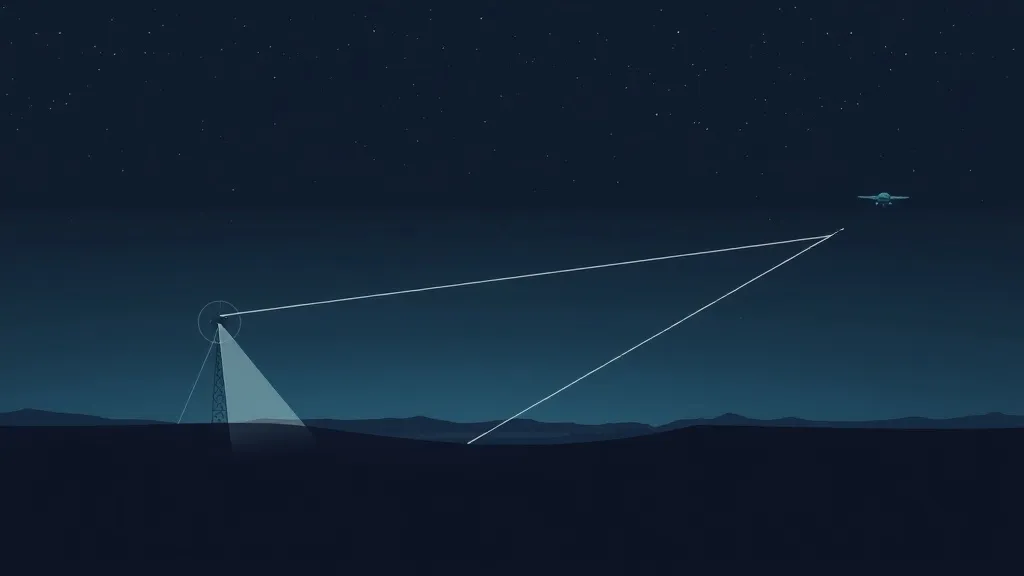
Here is the catch. A radar beam does not always travel in a straight line. The atmosphere can bend it, and when it bends badly the screen fills with objects that are not there.
NOAA calls these false echoes anomalous propagation. The most dramatic form is superrefraction, which happens during a temperature inversion - a layer where the air gets warmer with height instead of cooler, the reverse of normal. That warm lid bends the radar beam downward, sometimes so sharply that it curves back into the ground far from the station and returns a strong echo. NOAA’s own guidance is blunt about the danger: under superrefraction, the false signal “can also appear the most real.”
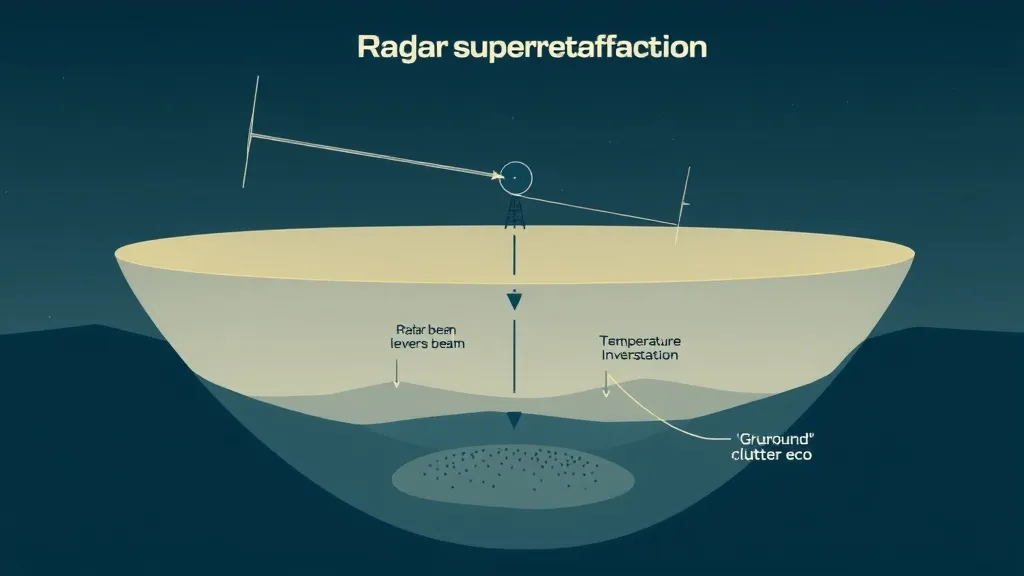 The conditions that cause it are ordinary - a warm, dry layer sitting over cooler, moister air near the surface, common over oceans and coastlines where many military encounters happen. A phantom born this way can look like a solid target with a real position and even apparent motion as the atmospheric layer shifts. This is not a fringe theory; it is the same effect that routinely paints fake storms on weather radar, and forecasters spend real effort filtering it out.
Why the best cases have more than one witness
If radar can lie, how does anyone trust it? The answer is the rule investigators live by: corroboration. A single sensor can be fooled, but it is very hard to fool several different sensors, working on different physical principles, in the same way at the same moment.
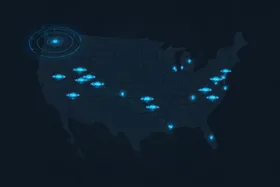
NOAA weather forecasters already do a simple version of this - they check whether a second radar and a satellite image agree before believing an echo. The UAP world applies the same logic at higher stakes. When the Office of the Director of National Intelligence reviewed 144 military UAP reports in its 2021 assessment, it flagged that 80 of them involved observation across multiple sensors at once - radar, infrared, weapon seekers and human eyes together - which is what makes those cases so stubborn. A target that radar, an infrared camera and a trained aircrew all register is not easily written off as a bent beam.
The scientists are candid that the data is often not good enough to be sure either way. NASA’s 2023 independent UAP study concluded that analysis is “hampered by poor sensor calibration, the lack of multiple measurements, the lack of sensor metadata, and the lack of baseline data.” That is not a dodge. It is the honest reason so many cases stay unresolved: not because the objects defy physics, but because a lone, uncalibrated sensor cannot tell a genuine anomaly from an artifact.
So the next time a headline leans on a dramatic radar track, the useful question is not whether radar saw something. It is whether anything else did. The cases worth taking seriously - the Navy’s Nimitz Tic-Tac encounter among them - are the ones where the machine and the humans agreed. Radar is a formidable witness. It is just most convincing when it is not the only one, a principle that runs through how the military’s own cameras can mislead as much as its radars can.