The Pentagon's famous infrared UAP footage is genuine. But the cameras that captured it have specific design quirks - and knowing what they are changes what you see.
In 2015, a U.S. Navy F/A-18 Super Hornet pilot locked his targeting pod onto an object he could not identify over the Atlantic Ocean. The resulting footage - known by analysts as “Gimbal” - shows an elliptical shape that appears to rotate smoothly against the wind before accelerating out of frame. The Pentagon officially released the clip in 2020. It has since been viewed tens of millions of times, and most viewers walk away convinced they have seen something extraordinary.
That impression is partially correct. The object is real. The recording is authentic. But understanding what the sensor actually captured requires knowing something about the camera itself - and about two specific design quirks that make several objects in these videos look stranger than they may be.
What an ATFLIR Pod Actually Is
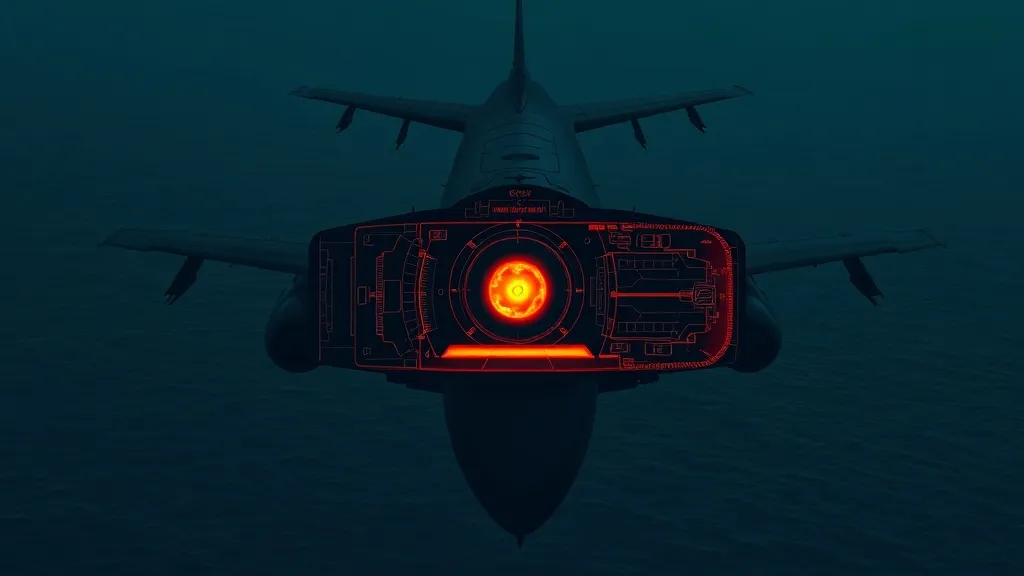
The cameras behind most of the famous military UAP videos are AN/ASQ-228 ATFLIR pods - Advanced Targeting Forward-Looking Infrared systems, manufactured by Raytheon and mounted beneath F/A-18 Super Hornets. According to the manufacturer’s specifications documented on Wikipedia, they combine an infrared camera, a low-light television camera, a laser rangefinder, and a laser designator in a single housing.
Critically, the infrared mode does not record visible light. It records heat. Objects warmer than their surroundings appear bright in “white-hot” mode, or dark in “black-hot” mode, depending on how the operator configures the display. That is why the objects in these videos appear as glowing blobs rather than distinct shapes - the camera is mapping thermal contrast, not colour or visual outline. Size, surface detail, and structural features that would be visible to the eye are invisible to the sensor.
The pod also houses a multi-axis gimbal - a rotating mount that keeps the camera locked on a moving target even as the aircraft maneuvers. A derotation algorithm continuously counteracts the pod’s own rotation to stabilise the image. This stabilisation is highly effective. And it has a consequence.
Two Quirks That Changed the Story
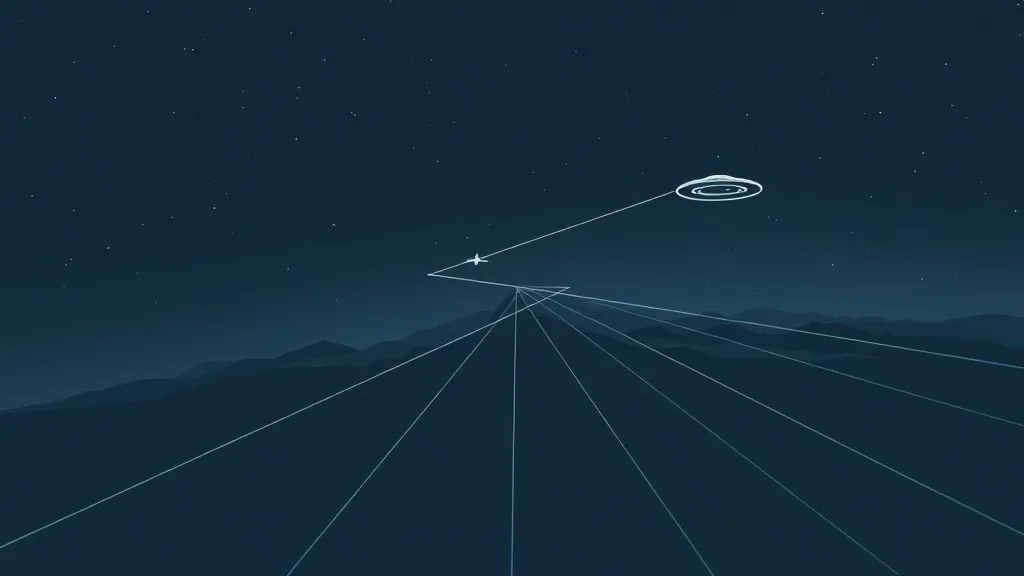
The “GoFast” video - also recorded in 2015 and released publicly in 2020 - shows an object appearing to skim the ocean surface at remarkable speed. AARO, the Pentagon’s All-domain Anomaly Resolution Office, subsequently analysed the footage alongside the aircraft’s flight telemetry data. Its finding: the object was approximately 13,000 feet above sea level when recorded. The apparent surface-skimming and the apparent extreme velocity were a parallax effect.
Parallax is the same phenomenon that makes roadside trees appear to rush past a car window while mountains in the distance seem almost stationary. When an observer is moving fast, closer objects appear to move at high angular speed relative to the background. The F/A-18, travelling at several hundred knots, was generating most of the apparent object velocity. The GoFast object was not skimming the ocean. It was roughly 2.5 miles up and moving at a far more mundane speed, according to the telemetry analysis.
 The Gimbal video presents a different problem. A 2023 analysis published on arXiv by a team of independent researchers examined the geometry of the sensor recording and multiple possible flight paths. One well-supported hypothesis: the object’s apparent rotation may be produced by the ATFLIR’s own derotation mechanism. Bright infrared sources create asymmetric glare, and when the system actively counteracts its own rotation to stabilise the image, that glare can appear to rotate even if the physical object itself is stationary. Whether this fully explains the Gimbal footage remains actively debated, but it is a documented property of the sensor type - not speculation invented to dismiss the footage.
What the Sensors Do Confirm
Sensor artifacts are not a blanket explanation that dissolves every case. The cameras establish several things that cannot be hand-waved away: that a real thermal signature existed, that it was tracked continuously across multiple seconds of stable sensor lock, and - in the strongest cases - that entirely separate radar systems aboard multiple platforms simultaneously returned data from the same location.
The 2004 Nimitz encounter is the most corroborated case in the public record. The FLIR1 footage - known informally as the “Tic-Tac” clip - was accompanied by tracking from the USS Princeton’s ship-based Aegis radar, separate airborne radar returns from the F/A-18s, and visual observation at close range by multiple trained pilots. None of the parallax arguments that apply to GoFast, and none of the derotation-glare hypotheses raised for Gimbal, apply to this case. AARO has designated the Nimitz encounter unresolved - meaning the government’s own investigators examined it with access to classified supplementary data and could not identify what was recorded.
That is not a small thing. “Unresolved” in AARO’s terminology is not a shrug. It is the conclusion reached after applying all available analytical tools and still coming up empty.
Why the Distinction Matters
Understanding what these cameras can and cannot confirm is not about debunking UAP evidence. It is about reading it at the right level of confidence.
When the GoFast object turns out to be 13,000 feet up, that is not a dead end. It is information. It tells investigators what corroborating data would make a future case more conclusive - independent radar confirmation, stable altitude telemetry, triangulated tracking from a second aircraft. The cases that survive that level of scrutiny are more compelling precisely because they have been tested against the instruments’ own limitations and held up anyway.
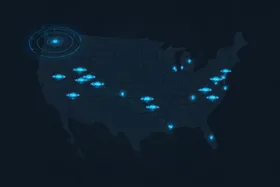
The Pentagon has now released hundreds of UAP records under the PURSUE declassification programme. Some contain footage from sensor types not seen in the original Navy videos, including cases from 2026 that AARO has not yet resolved. The tool for evaluating all of it is the same: know what the camera sees, and know what it does not. The honest answer to the Gimbal question - “we do not know if the sensor artifact fully explains this” - is a more defensible position than certainty in either direction. And in the Nimitz case, “we cannot explain it” is exactly what the record shows.