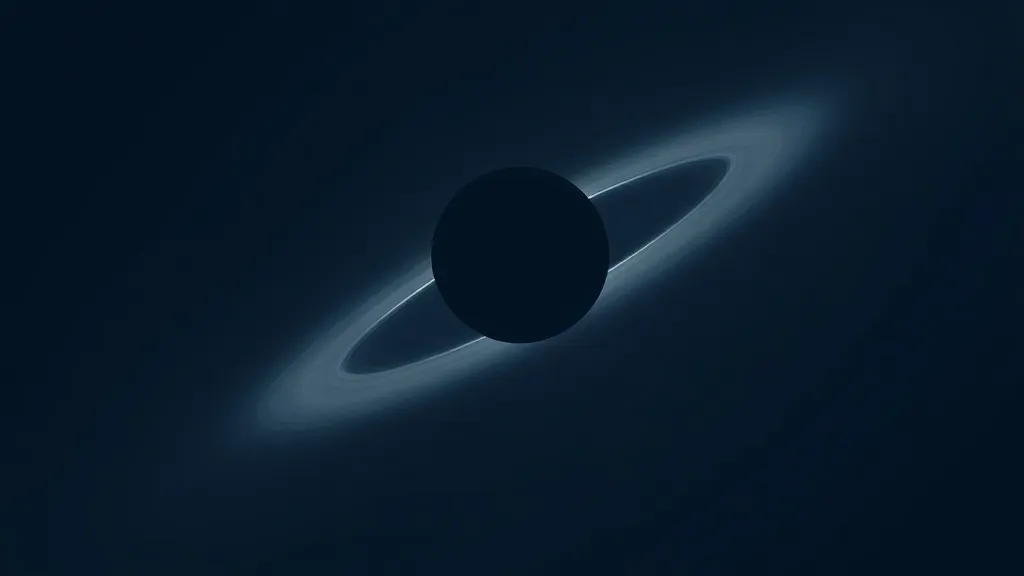
When a planet crosses its star, a sliver of light filters through its atmosphere and certain colors vanish - the fingerprints of its gases. That faint signal is how the search for life beyond Earth actually works, and why a promising result is never proof.
Somewhere about 700 light-years away, a puffy, roasting-hot planet called WASP-39 b swings in front of its star every four days. In 2022, NASA’s James Webb Space Telescope watched one of those passes and did something that would have sounded like magic a generation ago: it read the planet’s air. Buried in the starlight was the unmistakable signature of carbon dioxide, according to NASA - the first time that gas had ever been detected in the atmosphere of a world beyond our solar system.
Here is the strange part. Astronomers cannot actually see WASP-39 b. Even to Webb, it is far too small and too close to its blinding star to appear as anything more than part of the glare. They know what its atmosphere is made of not by looking at the planet, but by watching for the light that goes missing.
The colors that vanish
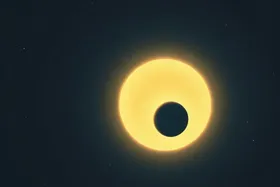
The method is called transmission spectroscopy, and the idea is simpler than the name. When a planet crosses the face of its star from our line of sight - an event called a transit - a thin ring of starlight grazes the planet’s edge and filters through its atmosphere on the way to us.
Gases in that atmosphere absorb light, but each gas swallows only its own exact set of colors, like a chemical fingerprint. “Each element or molecule in the atmosphere’s gas absorbs light at a very specific pattern of wavelengths,” NASA explains.
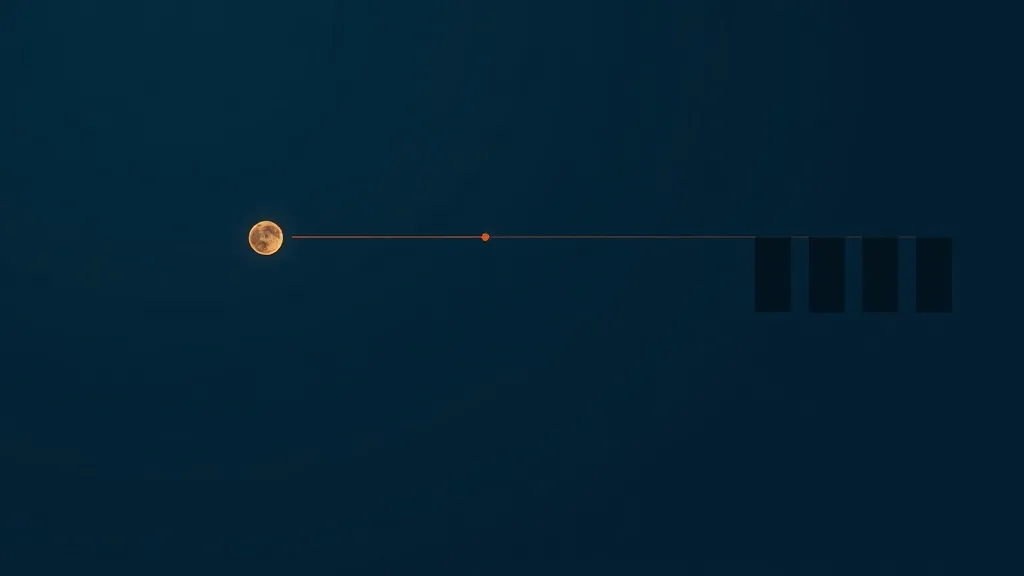 So astronomers compare two views. As NASA puts it, a transmission spectrum is made by comparing the starlight filtered through the atmosphere during a transit with the plain, unfiltered starlight when the planet sits beside the star. Subtract one from the other, and the colors that are now missing reveal which molecules were in the way. On WASP-39 b, Webb’s readings pointed to water, carbon dioxide, carbon monoxide and even sulfur dioxide in a single planet’s sky.
Picture holding a mixed drink up to a bright window. You cannot see the separate ingredients floating in it, but if you knew precisely which shades of light each one absorbed, the missing colors alone would give the recipe away.
Why a faint smudge matters
This is the same technique now aimed at the small, rocky worlds where life is at least conceivable. When astronomers reported the first atmosphere detected on a rocky planet in its star’s habitable zone, they were reading exactly this kind of filtered starlight.
The larger goal is a specific chemical recipe. On an Earth-like world, NASA notes, a transmission spectrum could in principle reveal oxygen, ozone, water, carbon dioxide and methane. Finding that particular combination on a distant rocky planet - roughly the mix Earth’s own biology maintains - would be one of the most consequential measurements in the history of science.
The proof of concept already exists on easier targets. Among Webb’s very first observations, in July 2022, was the atmosphere of the hot gas giant WASP-96 b, where the telescope produced what ESA called the most detailed infrared exoplanet transmission spectrum ever collected, its peaks marking the clear presence of water vapor.
The catch nobody should skip
But the signal is punishingly small. The atmosphere is a razor-thin shell around the planet’s edge, so the light passing through it is a minuscule fraction of the star’s total glare. NASA cautions that such features are “extremely faint,” which is why the technique demands so much observing time - the more light Webb gathers, the more confidently a molecule can be pulled out of the noise. Even on scorching giants like the world whose dawn and dusk skies were mapped as separate atmospheres, teasing out the chemistry takes careful modeling.
The deeper catch is interpretation. A gas that can be a sign of life can almost always be produced without life, too. Methane leaks from geology as readily as from microbes, and even oxygen can accumulate through non-biological chemistry. That is why researchers treat a single detection as a clue, never a verdict - the same restraint that runs through every serious attempt to answer whether we are alone in the universe.
For now, the achievement is quieter than a discovery of aliens, but it is real. We have built instruments that can sit near Earth, watch a shadow cross a star hundreds of light-years away, and come back with a list of what that unseen world is breathing. Finding life is still out of reach. Reading the air, remarkably, is not.