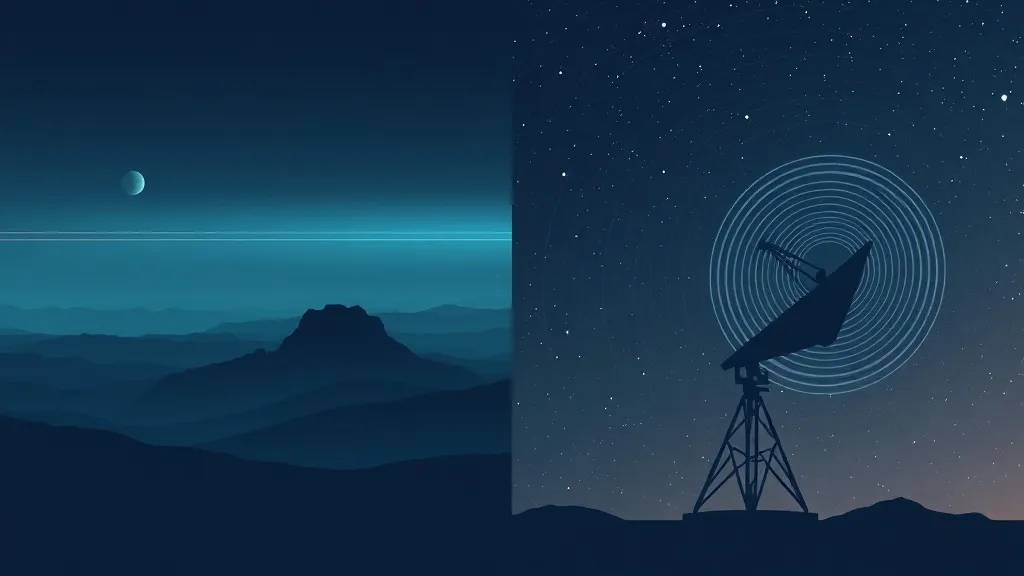
Biosignatures look for the chemical exhaust of living things in far-off atmospheres. Technosignatures listen for radio hums and laser pulses from technology. They are the two roads to alien life - and each has its own way of fooling us.
In 2025, a single molecule set off a wave of headlines. Astronomers reported they might have detected dimethyl sulfide - a gas made on Earth almost entirely by ocean life - in the air of a distant planet called K2-18 b. Within months, other teams reanalyzed the same data and largely talked the claim back down, according to Astronomy magazine, finding that ordinary molecules fit the signal just as well.
The episode was a lesson in how the search for alien life actually works. And it showed how that search quietly splits into two very different hunts.
One hunt looks for life’s chemical residue. The other listens for its machines. Scientists call them biosignatures and technosignatures, and they are looking for almost opposite things.
Reading a planet’s air
A biosignature is, in NASA’s words, “a substance, group of objects, or a pattern whose origin specifically requires a living organism.” In practice, on worlds we will never visit, that usually means a gas.
Living things constantly change the air around them. On Earth, photosynthesis floods the atmosphere with oxygen, while microbes belch out methane and nitrous oxide, NASA notes. So astronomers try to read the air of a planet trillions of miles away by catching the starlight that filters through its atmosphere and noting which colors go missing.
The most convincing signal is not one gas but a clash of them. Oxygen and methane react with each other and should not linger together for long, yet on Earth life keeps replenishing both. That chemical disequilibrium - two gases coexisting that ordinarily should not - is treated as a gold standard, because no known non-biological process maintains the pair at once.
The catch is that biology is not the only chemist. Methane seeps from geology as readily as from microbes, and oxygen can build up through non-living reactions. That is exactly why the K2-18 b claim cooled so quickly, and why researchers have proposed a formal roadmap for confirming a biosignature before anyone announces life. A promising gas is a clue, never a verdict.
Listening for the machines
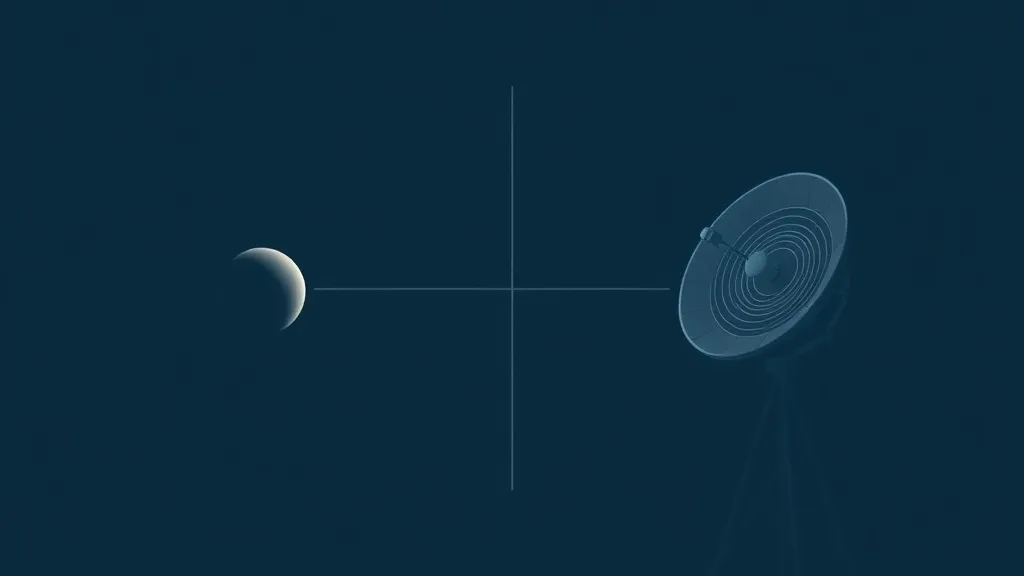
The other search skips biology entirely and looks for the fingerprints of technology. A technosignature, NASA explains, is any measurable sign of technology - most famously a narrow-band radio broadcast or a pulsed laser, but also subtler things: the waste heat of a vast machine, industrial pollutants in an atmosphere, or the glint of a structure built around a star.
This is the domain of SETI, the Search for Extraterrestrial Intelligence. The SETI Institute frames a technosignature as any signature that reveals the presence of technology developed by an intelligent civilization, and its scientists have been listening, on and off, for roughly six decades without a confirmed detection.
The appeal is that a technosignature can be unmistakable in a way a gas rarely is. A precisely tuned radio tone at a single frequency, or a laser flash brighter than a star for a billionth of a second, has no natural explanation. The problem is that our own civilization is loud. Satellites, phones, radar and microwave ovens all radiate, and separating a genuine cosmic signal from local interference is one of the field’s hardest daily chores - the reason SETI teams re-check and rule out nearly everything they flag while scanning nearby stars for signals.
Why the two searches rarely meet
The deepest difference is what a “yes” would actually mean.
A biosignature could point to nothing more than pond scum. It would be one of the most important discoveries in history, but it would not imply anyone is out there to talk to. A technosignature points the other way: it would imply builders, tool-users, a civilization - though not necessarily a living one. Because their signals travel for years or centuries before reaching us, a technosignature could be the echo of a society that has since gone silent.
So the two hunts answer different questions. Biosignatures ask, is there life? Technosignatures ask, is there intelligence? A world could easily have one without the other, which is part of why the searches use different instruments, different experts, and rarely trade notes.
What they share is a discipline the K2-18 b saga made vivid. Whether the signal is a faint smudge in a spectrum or a blip in a radio feed, the honest response is the same: treat a single detection as a question, not an answer, and try hard to prove yourself wrong before you tell the world you were right.