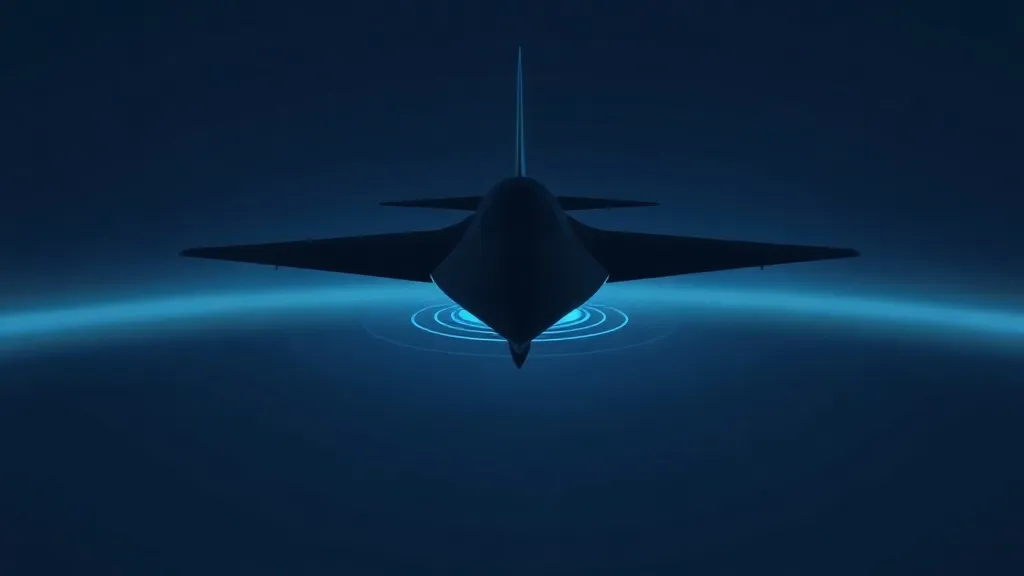
After five decades of overland supersonic flight being banned in the United States, NASA's experimental X-59 aircraft achieved Mach 1.1 on June 5, 2026 - a milestone that could let future passengers experience only a quiet thump instead of a disruptive boom.
NASA’s experimental X-59 QueSST aircraft broke the sound barrier for the first time on June 5, 2026, completing an 81-minute flight at Mach 1.1 over Edwards Air Force Base in California. The milestone, confirmed in a NASA mission blog published June 8, marks the first concrete proof that a human-built aircraft can exceed the speed of sound while generating a noise footprint quiet enough to be acceptable to communities on the ground - a goal that has driven aerospace research for more than 50 years.
A 50-Year Sonic Boom Problem
Commercial supersonic flight over the continental United States has been effectively prohibited since 1973, when the Federal Aviation Administration (FAA) banned overland supersonic operations after the Concorde’s development phase demonstrated that shockwaves from such aircraft reach the ground as a jarring double-crack audible up to 30 miles away. The Concorde flew transatlantic routes but could not operate supersonically over land in the US. It was retired in 2003, partly for economic reasons and partly because regulators showed no appetite for relaxing the noise rules.
The core physics problem: as an aircraft exceeds the speed of sound, it generates multiple overlapping shockwaves that coalesce into a single sharp pressure pulse at ground level, producing the familiar sonic boom. No aircraft had previously shown it was possible to break that physics pattern in a way that regulators or the public might accept.
How the X-59 Shapes Shockwaves
The X-59, built by Lockheed Martin’s Skunk Works division under NASA’s Quesst (Quiet SuperSonic Technology) mission, is designed to prevent that pressure pulse from forming. Its defining feature is a 38-foot needle-shaped nose extending forward of the cockpit - so long that there is no conventional forward windshield. Test pilots view ahead through an External Vision System camera. That elongated fuselage, combined with a top-mounted General Electric F414-GE-100 engine and precisely sculpted aerodynamic surfaces, is engineered to keep the multiple shockwaves generated at supersonic speed from merging into a single large disturbance.
According to NASA’s acoustic models, this shape reduces the ground-level noise signature to approximately 75 effective perceived noise decibels (EPNdB) - roughly equivalent to a car door closing - compared to the 105 EPNdB typical of a conventional supersonic aircraft. Whether that threshold will satisfy regulators and the public remains an open question the program is designed to answer.
What the June 5 Flight Confirmed
NASA test pilot Jim “Clue” Less lifted off at 11:08 a.m. PDT and flew for 81 minutes, reaching Mach 1.1 at 43,400 feet, according to NASA. This initial test focused on validating handling qualities at both subsonic and supersonic speeds, not on measuring community noise - that phase requires different conditions. NASA reports the aircraft performed as designed throughout.
The next phase involves flying the X-59 over several US communities at its operational design conditions of Mach 1.4 at 55,000 feet while residents on the ground are surveyed about their reaction to the sound. That data will be shared with the FAA and the International Civil Aviation Organization (ICAO) as evidence to support revising noise standards for overland supersonic flight - the regulatory mechanism needed before any commercial supersonic aircraft could legally operate over land.
What Is Documented vs. What Remains Uncertain
The acoustic modeling results and the aircraft’s performance on June 5 are documented by NASA. What is genuinely uncertain is how people will respond to the quiet boom in community overflight tests, planned for later in 2026. People’s subjective reactions to novel sounds vary considerably, and a sound perceived as a door closing in a test context may still be startling in a residential neighborhood.
Even if community response data supports regulatory reform, commercial supersonic aircraft capable of delivering an affordable passenger service do not yet exist. Several private ventures have been developing designs for overland supersonic routes, but all face significant engineering and economic barriers independent of noise regulations.
The Significance
The June 5 flight does not guarantee overland supersonic commercial aviation will arrive. It does establish, for the first time with real flight data rather than simulation, that the acoustic problem is solvable with the right aircraft design. The community overflight tests expected later this year will determine whether the solution is also acceptable - a distinction that now rests with the people on the ground, and ultimately with the regulators who will be shown the results.
NASA’s Quesst mission is expected to complete community overflight testing and deliver data to US and international regulators by the end of 2026, according to the agency.