Using its Mid-Infrared Instrument, NASA's James Webb Space Telescope identified methane and anomalously high carbon dioxide on comet 3I/ATLAS - a visitor from another star system - the first chemical fingerprint ever obtained from interstellar material.
NASA’s James Webb Space Telescope has detected methane in interstellar comet 3I/ATLAS, according to findings published June 1, 2026 in The Astrophysical Journal Letters. It is the first direct detection of methane on any object known to have originated outside our solar system, and the first mid-infrared chemical fingerprint ever obtained from interstellar material.
The observations were made using Webb’s MIRI (Mid-Infrared Instrument) on two dates in December 2025, as 3I/ATLAS was moving back out of the inner solar system after its closest approach to the Sun on October 29, 2025. The first observation was taken on December 15-16, when the comet was roughly 205 million miles from the Sun. A second observation followed on December 27, with the comet at approximately 236 million miles. Both used MIRI’s Medium Resolution Spectrometer, which simultaneously measures the gases present around a comet’s nucleus and maps their spatial distribution.
What Webb found
In addition to methane, Webb confirmed that 3I/ATLAS releases far more carbon dioxide relative to water than typical solar system comets. The combined methane and carbon dioxide measurements, NASA says, point to “a very different formation environment and chemistry than the vast majority of comets that formed within our solar system.”
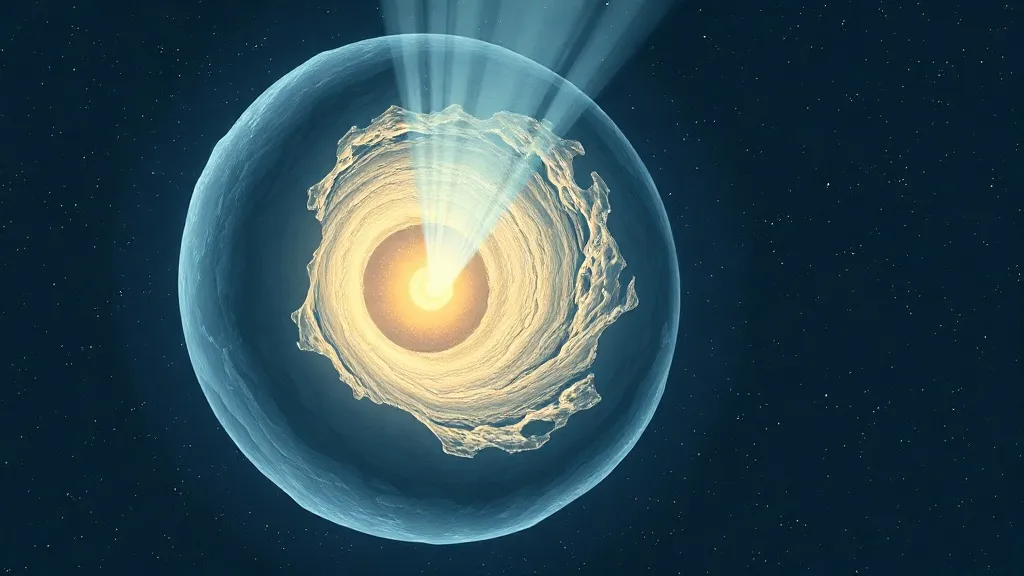
The methane itself behaved unexpectedly. Rather than appearing earlier in the comet’s passage through the inner solar system, it was detected only after 3I/ATLAS had already passed perihelion, suggesting the gas was buried below the comet’s outer surface layers. According to the research team, the surviving reservoir of primordial methane ice likely resided at depth and was only activated after sustained solar heating reached deep enough into the nucleus to sublimate it. The methane-to-water ratio observed has few analogues among comets born within our own solar neighbourhood.
Where 3I/ATLAS came from
3I/ATLAS is the third interstellar object confirmed to have passed through our solar system, following 1I/’Oumuamua in 2017 and 2I/Borisov in 2019. It was first detected on July 1, 2025 by the ATLAS (Asteroid Terrestrial-impact Last Alert System) survey telescope in Chile. Its extreme hyperbolic orbit - eccentricity approximately 6.1 - places its interstellar origin beyond reasonable doubt.
Earlier analyses, drawing on isotopic signatures and the object’s pre-encounter trajectory, suggest it most likely formed 9 to 12 billion years ago during what cosmologists call “cosmic noon” - the era of peak star formation across the galaxy. The comet is thought to have traversed interstellar space for billions of years before its passage through our solar system. Research published earlier this year found 3I/ATLAS contains roughly 30 times more heavy water than is typical of solar system comets, with isotopic values consistent with formation at temperatures below 30 Kelvin in a metal-poor early-universe environment.
The SETI Institute reported that it examined 3I/ATLAS for possible signs of technological origin, consistent with its standing practice for interstellar objects. No such signatures were identified. The institute concluded that the object’s behaviour, trajectory, and chemical composition are all consistent with a natural cometary body.
What the methane detection means
The significance of the Webb findings is primarily comparative. Solar system comets formed around the same young Sun, in the same protoplanetary disk, from broadly similar starting materials. An object that formed around a different star - particularly one from the early universe, in a lower-metallicity environment - should carry a chemically distinct record of those conditions. 3I/ATLAS appears to do exactly that.
Its high CO2-to-water ratio and the newly detected methane together suggest it condensed at very low temperatures in a region located far from its parent star. NASA describes the comet as preserving “a chemical seal of another star system from billions of years ago.”
Researchers also noted that as 3I/ATLAS moved farther from the Sun between the two December observations, gas production declined sharply, with water showing the most pronounced fall-off. That behaviour is consistent with the physical structure implied by the methane data - a comet in which the most volatile ices are buried beneath a more processed outer shell.
The findings do not carry direct implications for the presence of life elsewhere. What they do confirm is that interstellar visitors offer a scientifically rare opportunity: direct measurement of material assembled under conditions that cannot be replicated within our own solar system. 3I/ATLAS entered our solar system with a chemical record intact after some ten billion years of travel, and Webb has now begun to read it.