In January 2026, the Varginha incident - Brazil's most-documented alleged UFO encounter - arrived at a Capitol Hill closed-door session. For the first time, a neurosurgeon who says he treated a captured being agreed to go on the record.
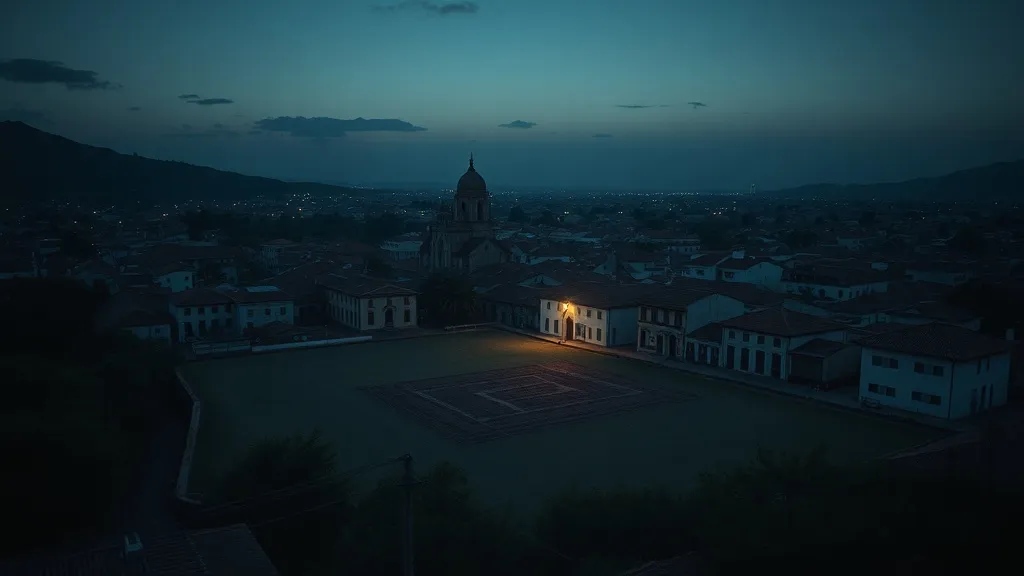
On the afternoon of 20 January 1996, three young women cutting through a vacant lot in Varginha, a mid-sized city in Brazil’s Minas Gerais state, encountered something they could not explain. Liliane Silva, then a teenager, described it later: “It was short in stature, with red eyes, brown skin, as if covered in oil.” The three ran. Within days, a story of a crashed craft, captured creatures, and a military response was moving across Brazil.
Thirty years later, the Varginha incident is still being investigated - and in January 2026, it arrived at the United States Congress.
What Witnesses Reported in 1996
The incident began a week before the encounter. On January 13, 1996, Carlos de Sousa, a geography teacher and ultralight pilot, reported seeing a cylindrical object trailing smoke descend toward the countryside outside Varginha. Then came the main sighting on January 20.
The three young women - Liliane Silva, her sister Valquira, and their friend Katia Xavier - reported a small humanoid figure crouching near a wall. Investigators who gathered their accounts separately noted consistent details: a large, elongated head, reddish eyes, dark oily skin, and a slight, hunched frame. Their descriptions did not contradict each other on the key points.
What followed, according to local accounts collected over the following months, included military vehicles near the site, claims that a being was transported to the Regional Hospital in Varginha, and the death in February 1996 of Marco Eli Chereze, a soldier who allegedly had direct contact with whatever was recovered. Chereze died of septicaemia - an acute blood infection - at age 23. The circumstances have remained a point of dispute since.
The Brazilian Army investigated and concluded, in a 2010 military inquiry, that the creature sighting was most likely a case of mistaken identity. The military identified a local man nicknamed “Mudinho” - described as mentally unstable and found crouching in the rain - as the most probable explanation for what the women saw. Officials stated that military activity in the area during those days was real but entirely routine. The United States Pentagon’s All-domain Anomaly Resolution Office (AARO) said in its 2024 historical review that none of its investigations into UAP reports had “reached the conclusion that any of the UAP reports indicated extraterrestrial origin.”
Thirty Years Later: New Testimony, New Questions
In January 2026, filmmaker James Fox - who has investigated the Varginha case for over two decades - organised a delegation of Brazilian witnesses to travel to Washington, D.C. to mark the 30th anniversary. On January 15, a closed-door session was held in the office of Representative Tim Burchett (R-Tenn.) and attended by Representatives Anna Paulina Luna (R-Fla.) and Eric Burlison (R-Mo.), both active in the House Task Force on the Declassification of Federal Secrets, according to The Debrief. The meeting included witnesses and medical professionals who had not previously spoken on the record.
Five days later, a public press conference at the National Press Club in Washington brought the most striking new element: the first on-record statement from Dr. Italo Venturelli, a 73-year-old retired neurosurgeon who says he was on duty at the Regional Hospital in Varginha in January 1996. Venturelli claimed that a colleague had sutured a wound on a being brought in during those days, and that he had personally observed it. He described the being as roughly the size of a seven-year-old child, with white skin, what he described as lilac-coloured eyes, and three fingers with an opposing thumb on each hand.
Venturelli said he had avoided speaking publicly for decades out of concern about professional consequences. A serious health episode in recent years, he said, changed his decision. “Most doctors are afraid to speak out because they have been threatened,” he told those assembled.
Dr. Armando Fortunato, a forensic pathologist also present at the event, presented testimony relating to Marco Chereze’s death. He referenced a statement from another pathologist describing a bacteria of, in his characterisation, “extremely high aggressiveness and lethality.” No medical records corroborating either account have been publicly produced.
Kirk McConnell, a retired Senate staffer with 37 years of congressional experience, said at the press conference that senators had previously met with “very credible sources” in classified settings regarding what he characterised as “highly intelligent nonhuman beings” and “government retrievals.” McConnell did not name the senators or specify when those meetings occurred.
The Persistent Gap
The core difficulty the Varginha case has always presented is the distance between detailed, consistent witness accounts and verifiable documentation. No photographs or videos of a craft or being from 1996 have ever emerged. Dr. Marcos Vinico Neves - who allegedly conducted the initial examination of the being - died in 2018; no medical records have been located. Six other Brazilian witnesses who were invited to participate in the January 2026 events were denied US visas and submitted accounts by video only.
The witnesses who have spoken are not anonymous. Liliane Silva has given consistent testimony across 30 years and still lives in the region. Dr. Venturelli’s name and medical background are on the public record. What has not appeared is the paper trail - the hospital admission, the discharge documents, the military orders - that would allow independent researchers to test the accounts against bureaucratic reality.
Whether the congressional session will lead to a formal investigation, a records request to Brazilian authorities, or a referral through the ongoing PURSUE declassification programme remains unclear. What the 30th anniversary did produce is something the case previously lacked: a medical professional, named and on record, prepared to describe what he says he saw.
That is a new data point. It is not, on its own, evidence of what happened in Varginha in 1996.