A 300-hour Very Large Array programme, the first systematic radio study of its kind, finds that accretion flow - not jet presence - is the variable that controls how tidal disruption events appear across all wavelengths, overturning a decade-old two-category model.
A 300-hour systematic radio survey of supermassive black holes shredding nearby stars has overturned the field’s long-standing two-category model, finding that the rate and character of accretion - how material spirals onto the black hole - is the single variable governing what these violent events look like in the radio spectrum. The results, led by Kate Alexander of the University of Arizona and presented at the 248th American Astronomical Society (AAS) meeting in Pasadena on June 14, 2026, challenge a classification framework that has shaped tidal disruption event (TDE) research for over a decade.
What Tidal Disruption Events Are
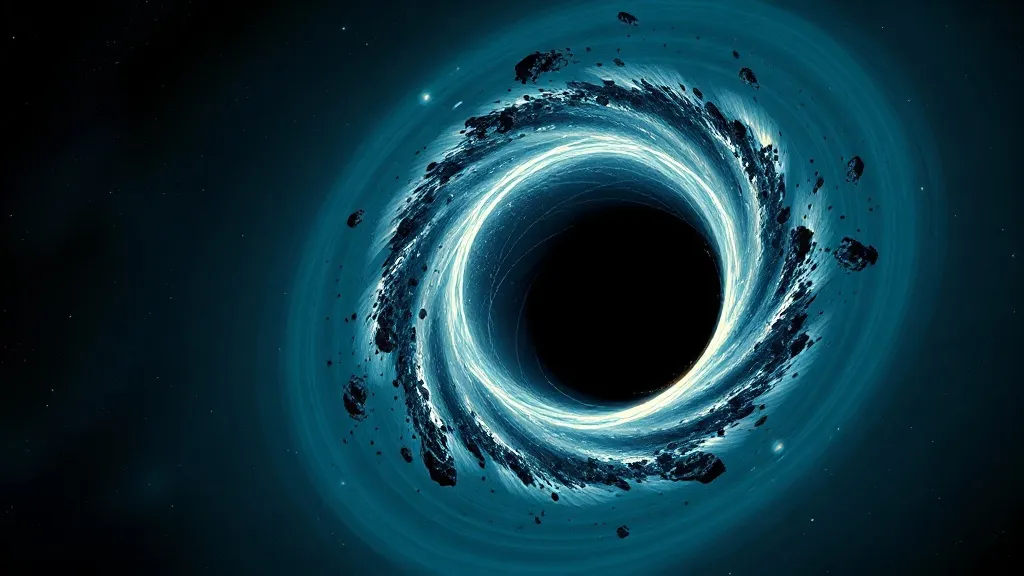
A tidal disruption event occurs when a star passes within the tidal radius of a supermassive black hole and is torn apart by gravitational forces. The stellar debris forms a stream, a portion of which falls back and accretes onto the black hole in a months-long flare of radiation visible across radio, infrared, optical, ultraviolet, and X-ray wavelengths. These events are among the few mechanisms by which astronomers can directly observe an otherwise dormant supermassive black hole becoming briefly active, making them uniquely useful probes of galactic nuclei.
The Two-Category Model and Its Limits
For roughly a decade, researchers classified TDEs into two primary categories based on radio behaviour: those that produce bright, relativistic jets - launching material at close to the speed of light - and those that do not. The jets-or-no-jets framework helped organise a growing but sparse observational record, but it was built from a relatively small sample observed with inconsistent methods across different instruments and epochs.
What the VLA Survey Found
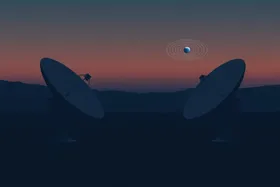
Alexander’s team, working under NSF Karl G. Jansky Very Large Array Large Program 20B-377, conducted what the NRAO describes as “the first radio monitoring campaign to apply a uniform, systematic observing strategy to an entire population” of TDEs. The programme was awarded 300 hours of VLA time at the Array’s facility in Socorro, New Mexico, beginning in November 2020.
The results, published in The Astrophysical Journal, show that TDEs are considerably more diverse than the two-category model captured. The team analysed 31 optically discovered TDEs using radio data from the VLA and MeerKAT, combined with X-ray data from NASA’s Neil Gehrels Swift Observatory and optical and ultraviolet photometry. Across the sample, radio evolution consistently correlated with behaviour at optical and X-ray wavelengths - pointing to the accretion flow as the determining factor, not jet classification.
Approximately 40 percent of the optically discovered TDEs in the survey showed delayed radio emission appearing years after the initial disruption - a phenomenon that the old taxonomy did not account for. TDEs with delayed radio emission also differed statistically from those without, including showing a significantly lower probability (p = 0.002) of exhibiting helium emission lines in early-phase spectra, according to the paper.
“Radio evolution correlates with behaviour at other wavelengths, pointing to the accretion flow - how material spirals onto the black hole - as the driver of whether outflows are launched,” according to the NRAO summary of the AAS 248 press conference presentation.
A Theoretical Framework for the Delay
A companion theoretical paper in The Astrophysical Journal, by Samantha C. Wu and colleagues at the Carnegie Institution for Science and Caltech, proposes that delayed radio emission arises from collisions between mass outflows launched by instabilities in the TDE accretion disk. The team modelled two scenarios: outflow-outflow collisions, which produce rapidly evolving radio flares peaking within roughly 100 days; and outflow-environment collisions, in which outflows interact with the surrounding circumnuclear medium over timescales of 100 to 1,000 days. The shock velocities in the models reach between 5 and 30 percent of the speed of light, with radio luminosities consistent with the observed population.
The disk-instability mechanism is consistent with accretion being the primary controlling variable - supporting the observational findings from Alexander’s survey.
Why the Sample Will Grow Rapidly
The Vera C. Rubin Observatory’s Legacy Survey of Space and Time (LSST) began issuing real-time transient discovery alerts in February 2026. LSST is expected to increase the number of known TDEs by orders of magnitude over the coming decade, providing the statistical foundation needed to test whether accretion-driven outflow models hold across the full diversity of TDE environments, host galaxy types, and black hole masses.
A related VLA study submitted in June 2026 - focusing on AT 2023mfm, an off-nuclear TDE in which the disrupting black hole appears displaced from its galaxy’s centre by roughly 1.06 kiloparsecs - illustrates how the survey programme is extending TDE science into new territory. Off-nuclear events suggest that some supermassive black holes are not sitting at galactic centres as expected, raising further questions about black hole dynamics in merging galaxy systems.
What the Findings Do and Do Not Establish
Neither the VLA survey results nor the companion theory paper claim a complete overthrow of existing TDE models. Rather, both papers argue that accretion physics is the primary organising variable that prior taxonomy did not fully capture. The fraction of events showing delayed emission, the correlation between radio and multiwavelength evolution, and the statistical differences in spectral properties all point in the same direction - but the authors acknowledge that data limitations and sample heterogeneity mean further systematic monitoring is required.
The work nonetheless demonstrates that dormant supermassive black holes can be mapped in detail through the radio signatures of their feeding events, providing a new observational tool for studying the otherwise invisible environments of galactic nuclei.