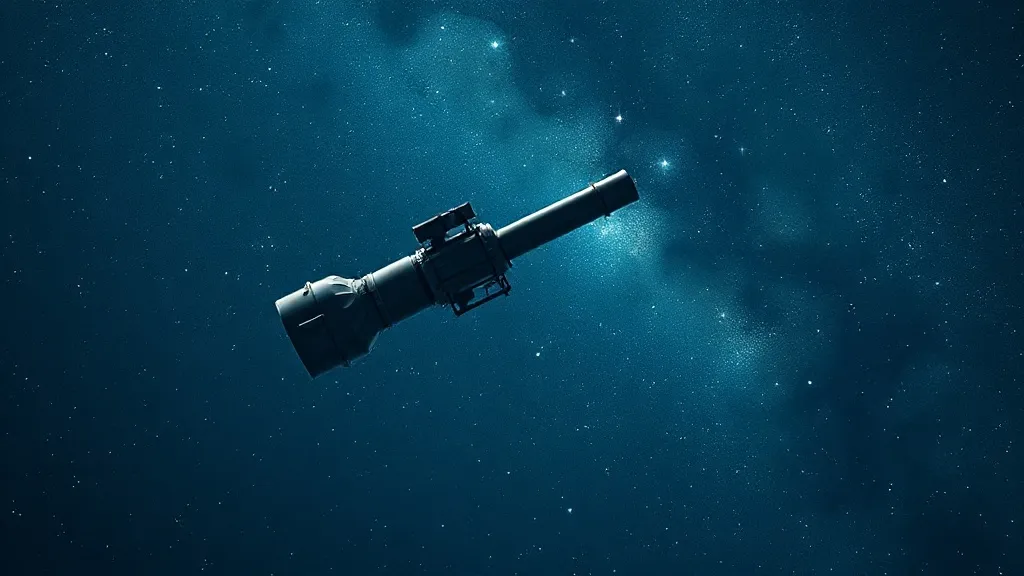
NASA confirmed August 30, 2026 as the launch date for the Nancy Grace Roman Space Telescope - eight months early. The wide-field infrared observatory will survey 100 million stars and is expected to catalogue approximately 2,500 new exoplanets.
NASA has confirmed August 30, 2026 as the launch date for the Nancy Grace Roman Space Telescope, advancing the mission eight months ahead of its original schedule. The announcement was made on June 2, 2026 by Joel Montalbano, Acting Associate Administrator for NASA’s Space Operations Mission Directorate, at a joint meeting of the Space Studies Board and Aeronautics and Space Engineering Board, both convened under the National Academies of Sciences, Engineering, and Medicine. A NASA Science blog update followed on June 3.
The telescope is currently undergoing final packing at NASA’s Goddard Space Flight Center in Greenbelt, Maryland, and is expected to be transported to Kennedy Space Center in Florida later this month. It will launch aboard a SpaceX Falcon Heavy rocket.
A Wide-Field Observatory Designed for Scale
The Nancy Grace Roman Space Telescope is a wide-field infrared observatory named after NASA’s first Chief of Astronomy, whose advocacy in the 1960s helped establish the foundational concepts for space-based telescope programmes including the Hubble Space Telescope.
According to NASA, Roman’s Wide Field Instrument will have a field of view at least 100 times larger than Hubble’s, allowing it to image enormous sections of sky in a single exposure. The Planetary Society describes this capability as enabling Roman to “survey 100 million stars” over the course of its primary mission - a statistical reach that no previous space telescope has approached.
Roman is being sent to the Sun-Earth L2 Lagrange point, approximately 1.5 million kilometres from Earth - the same orbital region occupied by the James Webb Space Telescope. Its primary mission is designed to last five years, according to SpacePolicyOnline, though the spacecraft carries enough hydrazine propellant to operate for at least ten.
The Exoplanet Census
The mission’s most publicised science goal is a systematic survey of exoplanets across the galaxy. Roman will use gravitational microlensing - a technique in which a foreground planet’s gravity bends and briefly amplifies light from a background star - to detect planets that are difficult or impossible to find by other methods, including rocky, Earth-sized worlds at orbital distances similar to those in our solar system.
The Planetary Society estimates Roman will identify approximately 2,500 new exoplanets during its mission, with many expected to be smaller, rocky worlds. That would represent a substantial addition to the roughly 5,700 confirmed exoplanets known as of 2026. Unlike the Kepler and TESS missions, which relied on the transit method and were most sensitive to planets orbiting close to their stars, Roman’s microlensing survey will probe the broader galactic population, including planets in the habitable zones of their host stars.
Roman also carries a Coronagraph Instrument, described by NASA as a technology demonstration that will directly image individual nearby exoplanets by suppressing starlight - a technique that could eventually allow astronomers to study exoplanet atmospheres in detail. NASA states the coronagraph represents a significant advance in high-contrast imaging capability for future missions.
Probing Dark Energy and Dark Matter
Alongside the exoplanet work, Roman is designed to address fundamental questions in cosmology. According to NASA, the mission will probe dark energy using three independent observational methods: baryon acoustic oscillations, which measure large-scale galaxy clustering patterns; Type Ia supernova observations, which serve as standardisable distance markers across cosmic history; and weak gravitational lensing, which maps how mass distributed across the universe distorts background light.
The combination of techniques gives Roman the ability to cross-check its own results, improving the precision of constraints on how dark energy is causing the universe to accelerate in its expansion - a phenomenon first measured in 1998 that has not yet received a satisfactory theoretical explanation.
Ahead of Schedule, Under Budget
NASA described the project as ahead of schedule and under budget at the time of the launch date announcement - an unusual status for a large flagship observatory. The mission had been targeted for early September 2026 as recently as April; the August 30 date moves the launch forward by approximately one month from that interim target, and eight months from the original planned window.
Science operations are expected to begin within a few months of launch, following instrument commissioning at L2. When Roman begins full survey mode, NASA says it will generate more observational data per year than any previous NASA science mission.
For researchers working on questions related to the distribution of potentially habitable worlds in the galaxy, the mission will provide the largest statistical sample of exoplanets yet assembled. Whether any of those worlds harbour conditions capable of supporting life remains, for now, an open question.