Founded in 2021 by astrophysicist Avi Loeb, the Galileo Project is building a global network of sensor-laden observatories to replace eyewitness reports with reproducible, AI-analyzed data on unexplained aerial phenomena.
Bringing Rigour to an Unanswered Question
For decades, reports of unexplained objects in the sky have circulated through government files and public imagination alike - yet formal scientific inquiry into the subject has been scarce. A research initiative headquartered at Harvard University is working to change that.
Founded in 2021 by Harvard astrophysicist Avi Loeb, the Galileo Project aims to study unidentified aerial phenomena (UAPs) using a purely scientific approach. Its stated goal is to bring the search for extraterrestrial technological signatures from accidental or anecdotal observations and legends into the mainstream of transparent, validated, and systematic scientific research.
The project’s name is itself a statement of intent. According to an overview published in the Journal of Astronomical Instrumentation, the project’s name was inspired by Galileo Galilei’s legacy of finding answers to fundamental questions by looking through new telescopes.
How It Works: Sensors, Not Stories
The core challenge the project addresses is one of data quality. Research into UAPs has long been criticised for working with little or low-quality data, and the Galileo Project aims to address this by setting up new sensor systems.
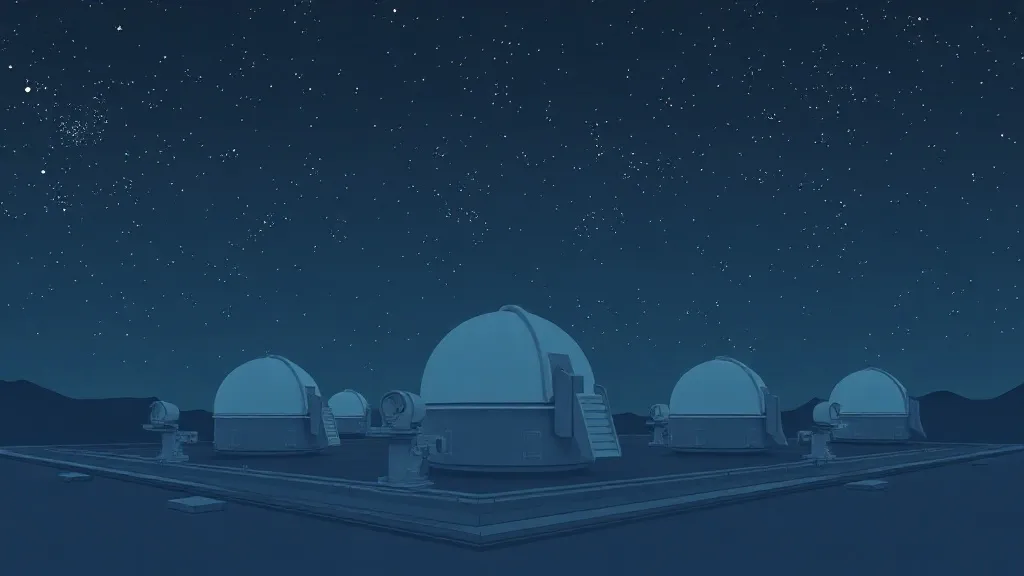
The team is developing a multi-modal instrumentation suite that monitors the sky in seven electromagnetic and three audio bands. The observatory arrays include infrared cameras, particle counters, spectrometers, and magnetometers, all pointed skyward.
The project’s first telescope was installed on the roof of the Harvard College Observatory in 2022. Since then, the network has grown considerably. According to Loeb, the Galileo Project now operates three observatories: one in Massachusetts, another in Pennsylvania, and the latest and most advanced in Nevada. That Nevada site is particularly striking: a team of Harvard researchers established an observatory on top of the Sphere - the giant immersive entertainment venue in Las Vegas - in order to detect signs of unidentified anomalous phenomena, making it the third Galileo Project site.
A generous grant from the Richard King Mellon Foundation helped fund the establishment and operation of the Pennsylvania instrument station, announced in April 2024.
AI Filters Half a Million Objects
The scale of data being collected is considerable. It took the research team two years to design and assemble the hardware components, another half year to calibrate the instruments, and a full year to analyse preliminary commissioning data collected from January through May 2024 - a dataset containing half a million observed objects.
The data is uploaded to a computer system and analysed by machine-learning algorithms, optimised to identify outliers among familiar insects, birds, leaves, clouds, balloons, drones, airplanes, and satellites that appear in the data stream. Anything that cannot be placed in one of those categories becomes a candidate for further scrutiny - though the project is careful to note that a genuinely anomalous detection would require extensive peer-reviewed confirmation before any extraordinary conclusions could be drawn.
Beyond the Atmosphere: Interstellar Objects
The Galileo Project’s scope extends beyond Earth’s atmosphere. The project is complementary to traditional SETI, in that it searches for physical objects - not electromagnetic signals - associated with extraterrestrial technological equipment.
The project plans to search for, characterise, and study interstellar objects like the peculiar ‘Oumuamua, detected in 2017, and intends to use astronomical surveys like the Vera C. Rubin Observatory so that such objects can be identified more quickly, with the longer-term aim of designing a space mission to intercept one.
The team has already been active in this area. In June 2023, researchers recovered 850 spherules from the Pacific Ocean impact site of interstellar meteor IM1, and a tenth of those submillimeter meteoritic spherules displayed a unique chemical composition, different from familiar solar system materials. It should be noted, however, that claims made by Loeb and his team about their findings from that expedition have been doubted by peers, according to a report in The New York Times. The project acknowledges that independent verification is central to the scientific process.
Privately Funded, Publicly Transparent
The project is primarily supported through private donations, as government funding for UAP-related studies remains limited and politically sensitive. Loeb has emphasised transparency as a core principle, contrasting the project’s open-publication approach with the classified handling that has historically surrounded government UAP investigations.
According to the project’s own published goals, even if no extraordinary evidence for extraterrestrial technology is found, the Galileo Project will at a minimum gather rich datasets that may foster the discovery of better scientific explanations for novel interstellar objects, new natural atmospheric phenomena, or terrestrial technology explanations for many presently inexplicable UAP.
For a field long dominated by speculation and anecdote, that commitment to measured, falsifiable science - whatever the results ultimately show - may itself be the project’s most significant contribution.