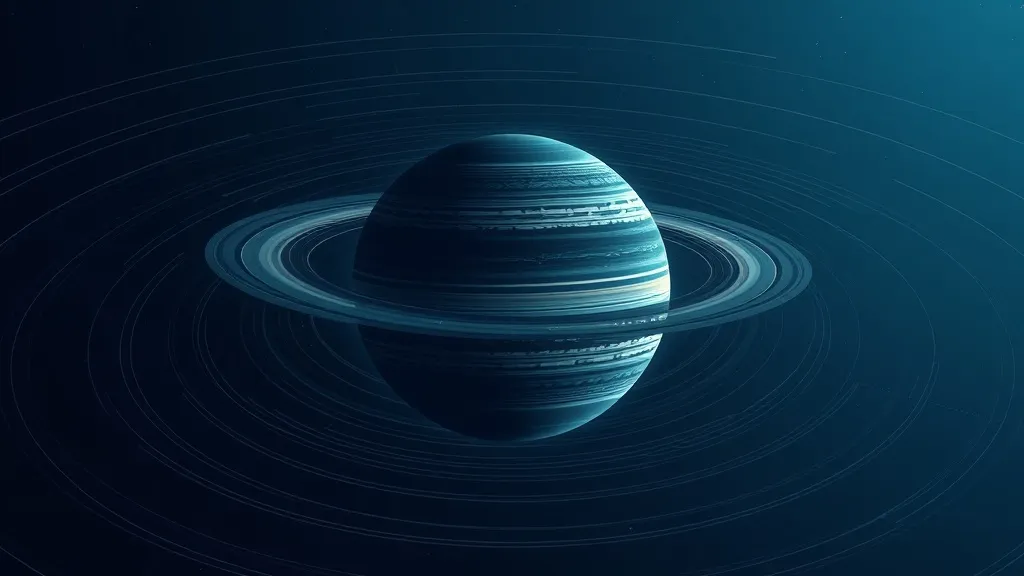
A Nature Astronomy study published June 2, 2026 found that slow atmospheric winds on seven ultra-hot Jupiters carry the signature of magnetic fields comparable in strength to those in our own solar system - the first such measurement ever made.
The first robust measurement of magnetic field strength on planets outside our solar system was published on June 2, 2026, after astronomers noticed something counterintuitive: winds on seven ultra-hot Jupiters were moving slower than expected, not faster.
The finding, published in Nature Astronomy, was led by Dr. Julia Seidel of the Laboratoire Lagrange at France’s Observatoire de la Côte d’Azur. It resolves a standing puzzle in exoplanet science and establishes a new observational method for probing planetary magnetic environments at interstellar distances.
What the Winds Revealed
The research team used the Gemini North telescope in Hawai’i - operated by NSF NOIRLab - and the European Southern Observatory’s Very Large Telescope to measure atmospheric wind speeds by tracing the spectral signatures of chemical markers in each planet’s atmosphere. Wind speeds across the sample ranged from approximately 7,200 km/h to over 25,000 km/h. For comparison, Jupiter’s fastest measured winds reach around 1,500 km/h.
The anomaly was in the pattern, not the raw speed. Hotter planets carry more energy and should, all else being equal, drive faster atmospheric circulation. Instead, the study found the opposite: wind speeds decreased as temperatures increased across the seven planets. According to the researchers, the only physical mechanism that can produce this specific inversion is magnetohydrodynamic drag - the braking effect a magnetic field exerts on a hot, electrically conductive atmosphere. The hotter the gas, the more conductive it becomes, and the more strongly a magnetic field can slow it down.
“This breakthrough opens a completely new window on exoplanet research,” Dr. Seidel said, as reported by Sci.News. Professor Vivien Parmentier, a co-author, noted the counterintuitive character of the result: hotter planets have more energy available to accelerate their winds, yet wind speeds fell as temperatures rose.
The magnetic field strengths inferred from the wind data were comparable to Solar System values - approximately four times the strength of Saturn’s magnetic field and roughly half the strength of Jupiter’s, according to the paper.
Why This Matters Beyond Hot Jupiters
Magnetic fields are considered a key factor in determining whether a planet can retain an atmosphere over geological timescales. Earth’s magnetosphere deflects charged particles from the solar wind that would otherwise erode the atmosphere layer by layer; Mars, which lacks a global magnetic field, has had most of its atmosphere stripped away over billions of years.
The seven planets studied are far too hot and too close to their host stars to be candidates for life. But the method demonstrated here - inferring magnetic field strength from wind speed anomalies measured through high-resolution spectroscopy - could in principle be extended to smaller, cooler planets as instrument capabilities improve.
Dr. Bibiana Prinoth, a co-author, suggested that the magnetic fields detected could be generating auroras in these planetary atmospheres that would be “even more dramatic” than Earth’s northern lights, according to Live Science.
A Method, Not Just a Single Result
Prior to this work, exoplanet magnetic fields were largely inferred through secondary evidence such as star-planet radio interactions, which are difficult to detect and interpret. By demonstrating that a magnetic signature is legible in atmospheric wind data from ground-based spectroscopy, Seidel’s team has established a technique applicable at existing observatories without requiring specialised new hardware.
The next generation of ground-based facilities - including the Extremely Large Telescope currently under construction in Chile - will apply this and related methods across a broader range of planetary sizes and temperatures.
What remains open is how commonly magnetic fields occur across the wider exoplanet population, and at what strengths they appear in Earth-sized or super-Earth planets. For the hot-giant population, the answer is now clear: magnetic fields appear present at Solar System-like strengths. According to NSF NOIRLab, that outcome was not guaranteed by prior theory - making the measurement itself a significant, independently valuable result in planetary science.