A peer-reviewed rebuttal co-authored by Nobel laureates Adam Riess and Brian Schmidt found two methodological mistakes in a high-profile 2025 study that claimed cosmic acceleration might be an illusion - and concluded the universe is still accelerating.
The universe is still accelerating. A peer-reviewed analysis published in the Monthly Notices of the Royal Astronomical Society on June 12, 2026 - co-authored by Nobel Prize winners Adam Riess and Brian Schmidt - identified two methodological errors in a 2025 study that had claimed cosmic acceleration might be an illusion. When those errors are corrected, the original 1998 evidence for an accelerating universe holds intact, according to the team.
The Discovery That Was Under Challenge
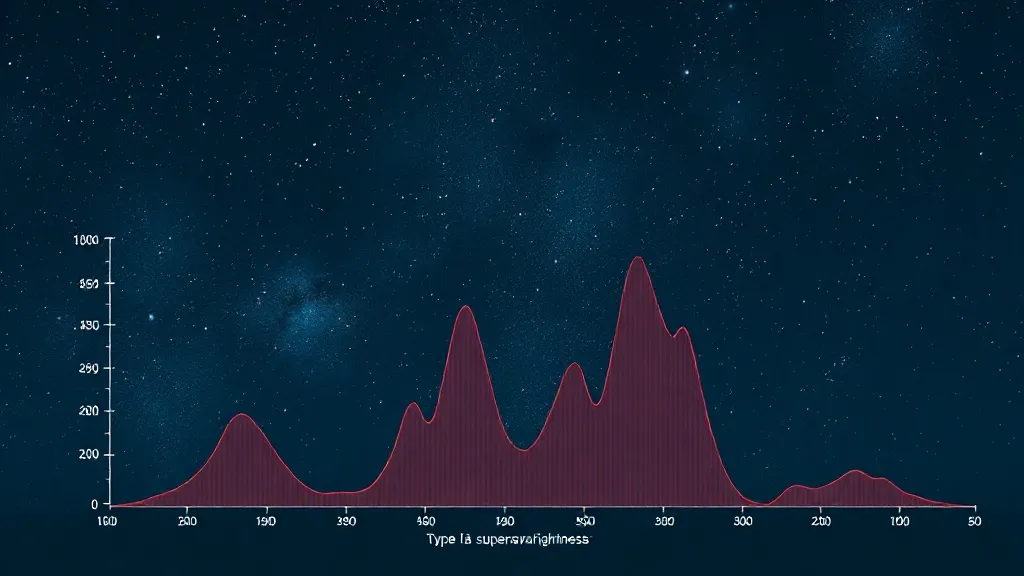
In 1998, independent teams led by Saul Perlmutter, Adam Riess, and Brian Schmidt discovered that the universe’s expansion is speeding up rather than slowing down. The finding, which earned Riess, Schmidt, and Perlmutter the 2011 Nobel Prize in Physics, rested on measurements of Type Ia supernovae - stellar explosions that reach a consistent peak brightness. That consistency makes them reliable “standard candles” for measuring cosmic distances. By mapping how fast distant supernovae are receding, astronomers concluded that an unknown force - widely labelled dark energy - is pushing the cosmos apart at an accelerating rate.
Dark energy is estimated to account for roughly 68 percent of the total energy content of the universe. Its precise nature remains one of the largest open questions in physics.
What the 2025 Challenge Claimed
In late 2025, a team led by Professor Young-Wook Lee and researcher Junhyuk Son at Yonsei University in Seoul published findings arguing that those standard candles might not be as reliable as assumed. Their contention was that the peak brightness of Type Ia supernovae could change depending on the age of the host galaxy, and that astronomers might therefore be “mistakenly concluding that the universe is accelerating when it is actually slowing down.”
The claim attracted significant attention among cosmologists. If confirmed, it would have required substantial revisions to modern dark energy science.
Two Specific Errors
The rebuttal was led by Dr. Phil Wiseman of the University of Southampton and co-authored by Riess, Schmidt, and Professor Mark Sullivan, also of Southampton. The team found two problems in the Yonsei methodology.
The first was conceptual. The 2025 study treated the age of the host galaxy as equivalent to the age of the star that eventually exploded as a supernova. That assumption is incorrect. White dwarf stars - the progenitors of Type Ia supernovae - are always considerably younger than the surrounding galaxies in which they are found. Equating the two introduced a systematic bias that made the supernovae appear to evolve with galaxy age when that evolution was an artefact of the approach.
The second was procedural. The Yonsei analysis omitted the host-galaxy mass correction, a standard adjustment routinely applied in modern supernova cosmology to account for differences in progenitor environments. Failing to apply it skewed the results in the same direction as the purported age effect.
When both corrections are applied, according to Wiseman’s team, the data are consistent with the original findings. “The previous and well accepted measurements were, in fact, fine and our current understanding of the fate of the universe remains robust,” Wiseman stated in the published study.
Professor Riess, one of the 1998 discovery’s co-leaders, addressed the challenge directly: “Extraordinary claims require especially careful testing. What we find is that when we calibrate these supernovae, accounting for different host environments and populations, the evidence for cosmic acceleration remains remarkably consistent.”
The Royal Astronomical Society, which publishes the Monthly Notices, described the outcome as a “crisis averted.”
What Remains Open
The rebuttal is specific to the observational case from Type Ia supernovae and does not resolve all theoretical debates about dark energy.
A separate mathematical analysis published in May 2026 by Blake Temple of the University of California, Davis proposed that the apparent acceleration could arise from instabilities in the Einstein-Euler equations - a theoretical argument that does not rely on the supernova data at all and was not addressed by the Southampton team’s paper.
The fundamental nature of dark energy - what it is physically, whether it is a fixed cosmological constant or an evolving field, and why the expansion rate takes the value it does - also remains unknown. The new paper speaks to the observational robustness of the 1998 result, not to those deeper theoretical questions.
What it establishes is that the Nobel Prize-winning discovery of cosmic acceleration is not undermined by the 2025 supernova study. The universe’s accelerating expansion continues to rest on evidence the field’s most prominent specialists describe as consistent and intact.