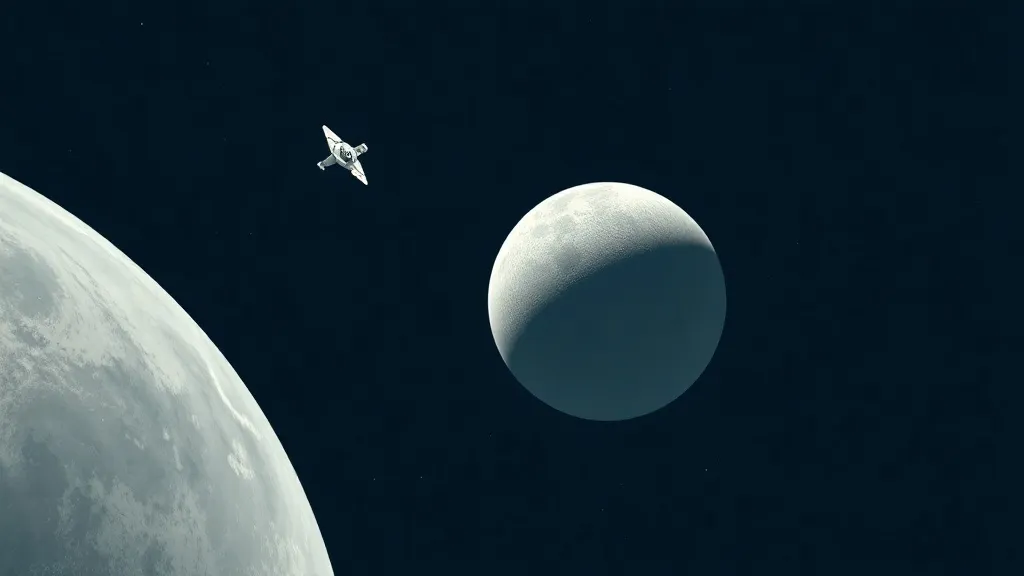
Four astronauts will spend two weeks in Earth orbit docking with both SpaceX Starship and Blue Origin's Blue Moon pathfinders - a critical rehearsal before the first crewed lunar landing on Artemis IV in 2028.
NASA announced on 9 June 2026 that four astronauts have been assigned to fly the Artemis III mission, scheduled for 2027 as a two-week Earth orbit test flight - not a Moon landing. The crew will dock sequentially with test versions of SpaceX’s Starship and Blue Origin’s Blue Moon lunar landers, becoming the first astronauts to enter either vehicle. That docking test is the mission’s primary objective, and its success is a prerequisite for the first crewed landing on the lunar surface, currently planned for Artemis IV in 2028.
The Crew
Commander Randy Bresnik is a retired Marine colonel with more than 7,000 flight hours and two previous spaceflights. European Space Agency astronaut Luca Parmitano, an Italian Air Force colonel, will serve as pilot on his third spaceflight; he previously commanded the International Space Station. Mission specialist Frank Rubio, a U.S. Army veteran and flight surgeon, holds the record for the longest American spaceflight at 371 days - a stay that was extended after the Soyuz capsule originally scheduled to return him to Earth was found to be damaged. Mission specialist Andre Douglas, a Coast Guard Academy graduate with a doctorate in systems engineering, will be making his first spaceflight. NASA astronaut Bob Hines has been named as backup crew member.
NASA described Artemis III as “one of the most highly complex missions the agency has undertaken.” ESA Director General Josef Aschbacher, commenting on Parmitano’s assignment, said the mission “will push the boundaries of spacecraft operations.”
What Artemis III Will Do
NASA’s Space Launch System rocket will carry the Orion crew module to low Earth orbit from Kennedy Space Center. After initial systems checks, Orion will rendezvous and dock with Blue Origin’s Blue Moon lander pathfinder - a test article designed to remain in orbit for multiple weeks without crew aboard.
According to NASA’s mission profile, the astronauts will spend approximately two days docked with the Blue Moon vehicle, conducting technology demonstrations and entering the lander to perform checkouts of its hardware and crew systems interfaces. Orion will then detach and rendezvous with SpaceX’s Starship pathfinder for approximately one day of similar testing and checkout operations.
The total mission duration is expected to run about two weeks. NASA notes that the precise length will be determined by real-time launch and docking performance.
According to NASA, neither the Blue Moon nor the Starship variants involved in Artemis III are operational landers - they are purpose-built test articles. The landing-capable vehicles intended to carry astronauts to the surface on Artemis IV are still in development.
Why the Mission Was Restructured
NASA revised Artemis III in February 2026, restructuring what had originally been conceived as the programme’s first crewed Moon landing into a dedicated Earth orbit validation test. The agency’s rationale: before astronauts attempt a landing using either of two entirely new commercial vehicles, those vehicles need to be validated in flight with crew aboard.
Both SpaceX and Blue Origin hold separate NASA contracts to develop human landing systems for the Artemis programme. Neither vehicle has previously carried crew in orbit. Artemis III is the only opportunity, before a lunar landing is attempted, to demonstrate that an Orion crew can board, test, and safely separate from each lander under actual spaceflight conditions.
What Comes Next
If Artemis III meets its objectives, Artemis IV is planned to carry astronauts to the lunar South Pole - a region of significant scientific interest because permanently shadowed polar craters are believed to contain water ice. NASA has described the Artemis programme as the foundation for a sustained human presence on and around the Moon, and as preparation for future crewed missions to Mars.
The 2027 launch date for Artemis III depends on SLS and Orion readiness, and on Blue Origin and SpaceX successfully launching their respective lander test articles into orbit before the crew departs Earth.
The Artemis programme has faced repeated delays over the course of its development. The 9 June announcement was notable for its specificity - a named crew, a year, and a clearly defined test objective. That level of commitment signals that NASA considers the 2027 timeline achievable. Whether the schedule holds will depend on the hardware, and on the two competing commercial landers meeting their own milestones on time.