Orbs dominate the U.S. government's declassified UAP files - and have for decades. Scientists now have several credible theories about what they could be, but a substantial share of cases still has no explanation at all.
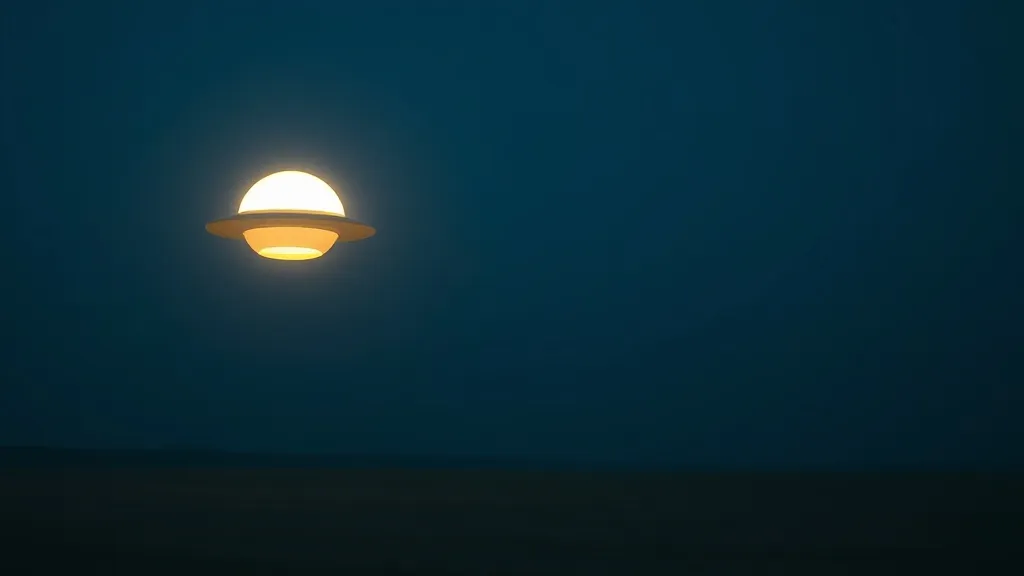
The most commonly reported unidentified aerial object in U.S. government files is not a silver disc or a black triangle. It is a ball of light - featureless, silent, and nearly impossible to characterize from a distance.
Every tranche of declassified UAP documents released in 2026 under the PURSUE program has contained them. Orange spheres that appeared to launch smaller red ones near a secure national security facility. A “super-hot” orb detected on infrared within roughly ten feet of a helicopter over a test range. Silent glowing spheres drifting over military bases for days without apparent origin. World War II pilots on both sides had a name for the same phenomenon: foo fighters. The orb, across eight decades of modern UFO reporting, keeps showing up.
According to the All-domain Anomaly Resolution Office (AARO), the Pentagon’s dedicated UAP investigation unit, orbs or spheres are the most frequently cited shape in cases where witnesses describe what they saw. AARO’s consolidated reporting found that “orb, round, or sphere” accounts for roughly 25 percent of cases where a shape is recorded - more than discs, triangles, or any other described form. The majority of UAP reports do not describe a shape at all, because the objects are too distant, too brief, or detected only by sensors. The actual proportion of orb-type sightings may be considerably higher.
Why Science Has an Answer for Most of Them
The honest scientific starting point is that the vast majority of reported orbs are almost certainly not mysterious in any fundamental sense. AARO and NASA’s independent UAP study team both identify sensor artifacts as a leading cause of spurious detections. Camera compression and image pixelation routinely render birds, balloons, and small drones as glowing orb-shaped blobs on infrared or night-vision footage. A commercial quadcopter with navigation lights at dusk can appear, to a trained military observer at several hundred meters, as a luminous sphere with no discernible structure or propulsion.
Natural atmospheric phenomena account for a further share. Ball lightning - real, rare, and still imperfectly understood - is a brief, luminous globe of plasma (a gas of electrically charged particles) that forms during or after electrical storms. Researchers have produced short-lived plasma spheres in controlled laboratory conditions by directing microwaves at silicon and by applying high-voltage arcs to saline water. These lab analogues last fractions of a second, but they demonstrate that freely floating plasma balls are physically possible - not a myth.
Other known phenomena that produce orb-like appearances include atmospheric temperature inversions, which bend light and can make distant objects appear to float, drift, or multiply, and piezoelectric effects (electrical charges released when rock is squeezed or fractured) in geologically stressed formations, which generate localized surface light in some terrains.
A Newer Hypothesis: Charged Dust from Meteors
Beyond those established explanations, researchers have proposed a more unusual but physically grounded theory: that some UAP orbs could be self-sustaining clouds of electrically charged meteor dust held together by their own magnetic fields.
The proposed mechanism runs as follows. When a meteor burns up in Earth’s lower atmosphere, it deposits a trail of fine particles rich in iron and nickel oxides - minerals that retain residual magnetism. That magnetic charge, researchers suggest, could cause nearby particles to draw together into a roughly spherical cloud. Friction between particles as they jostle against each other - a process called the triboelectric effect, the same physics as static electricity from rubbing a balloon - would generate an electrical charge that causes the cloud to glow. The structure could harvest energy from atmospheric wind shear to sustain itself for minutes.
The hypothesis relies entirely on known physics and makes a testable prediction: orb appearances should correlate with periods of elevated meteor activity, and the objects should produce a detectable magnetic signature at close range. Whether systematic data collection will confirm or rule out this theory is an open question. No controlled experiment has yet reproduced the full behavior seen in the most compelling reported cases.
The Fraction That Science Has Not Closed
None of the above accounts for every case. AARO Director Dr. Jon Kosloski, in a June 2026 assessment released through the PURSUE program, reported that approximately 40 percent of UAP cases remain unresolved after applying all available analytical tools - meaning analysts could not identify a credible known explanation given the available data quality. “Unresolved” is not a synonym for extraterrestrial; it means the data are insufficient to reach any conclusion at all.
The cases that resist classification tend to cluster around a specific profile: objects that accelerate and decelerate sharply without apparent propulsion, that appear in coordinated formation, or that are detected simultaneously on radar and by multiple witnesses at different vantage points. The sensor data in these reports is almost always limited - a brief video clip, a radar return without adequate track length, or eyewitness testimony alone.
That data quality problem is central to why the orb question remains open. Avi Loeb, the Harvard cosmologist who chairs the UAP Science Advisory Council advising the White House, Pentagon, FBI, and intelligence agencies, noted in a July 2026 essay that any object moving faster than the speed of sound through air would automatically generate a luminous plasma fireball - making some “orbs” a predictable physical signature of high-speed atmospheric transit, by whatever is causing it. Loeb’s council has specifically requested more than 50 videos, images, and sensor records related to known orb incidents from the Pentagon, and has called for deploying calibrated multiwavelength observatory stations to capture future events with the kind of data that could support or rule out any particular explanation.
The orb is not a new mystery. What is new is that government agencies are treating it as one worth solving with the instruments of science rather than dismissing or classifying. That shift, according to researchers in the field, is where the real progress will come from.