A federally funded research organization that works with the Pentagon and NSA has agreed to search its archives for UAP-related materials, extending the U.S. disclosure push into private contractor networks for the first time.
MITRE Corporation, a major federally funded research and development contractor that works closely with the Pentagon, the National Security Agency, and other federal agencies, has confirmed it will comply with a formal Congressional demand to search its archives for unidentified anomalous phenomena (UAP) records - including materials dating as far back as 1930. The move, reported by DefenseScoop on May 27, 2026, marks the first time the U.S. government’s UAP disclosure effort has formally reached into private contractor networks rather than official agency files.
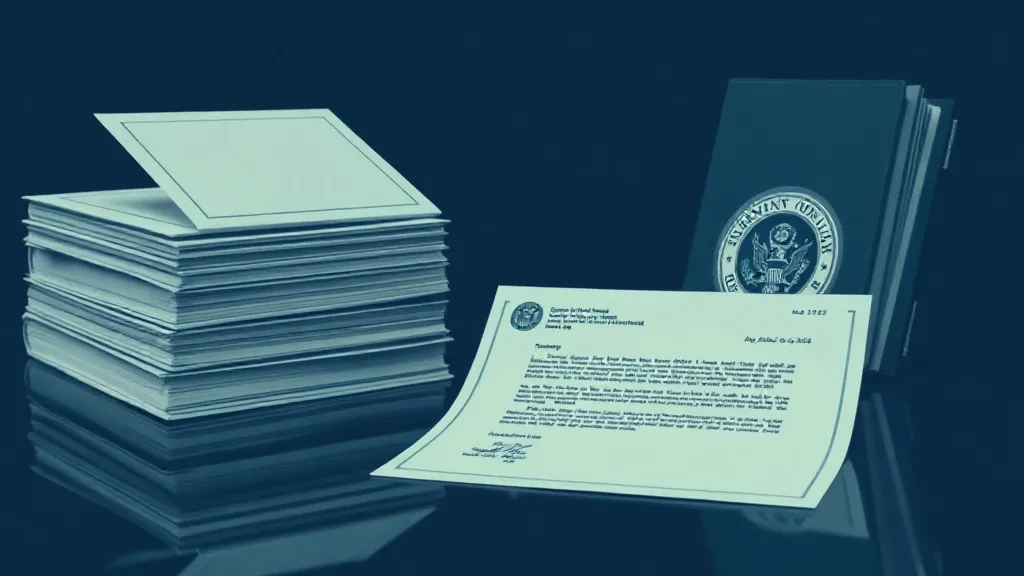
The demand came in the form of a 10-page letter from Rep. Eric Burlison (R-Mo.) dated May 22, 2026, and obtained by DefenseScoop. Burlison, a member of the House UAP Caucus, directed MITRE to designate a senior official to coordinate a response, issue a formal preservation hold on potentially responsive materials, produce a records-location index, deliver all unclassified responsive records in native electronic format with complete metadata within 45 days, and arrange a classified briefing for cleared Congressional staff on any restricted materials.
DefenseScoop reported that the correspondence “reflects concerns raised by whistleblowers alleging that the Pentagon and defense contractors are deliberately concealing sensitive UAP materials in private networks to bypass congressional and public oversight.” MITRE confirmed to DefenseScoop that insiders are already reviewing its archives.
What Is MITRE, and Why Does It Matter Here?
MITRE Corporation operates in a distinctive space between the government and the private sector. As a federally funded research and development center (FFRDC), it is substantially funded by federal agencies but structured as an independent nonprofit - meaning it is not a government body, yet does substantial work on behalf of the Department of Defense, the intelligence community, the Department of Homeland Security, and the Federal Aviation Administration, among others.
That structural position is at the heart of why UAP researchers and some lawmakers have focused attention on MITRE and similar FFRDCs. Unlike federal agencies, FFRDCs are not automatically subject to the same records disclosure and declassification frameworks that govern government departments. Critics have argued this creates a potential blind spot in the UAP disclosure effort: materials generated, received, or maintained by a contractor like MITRE on behalf of a government agency may not be captured by the PURSUE releases, even when those materials are directly relevant to UAP investigations.
The scope of Burlison’s letter - which requests records and assets dating back to 1930 - suggests the inquiry is deliberately broad and historical, covering nearly a century of materials that may predate modern UAP documentation in the United States.
The Broader Context: Disclosure Moves Beyond Government Files
The Burlison-MITRE correspondence is part of a widening pattern of Congressional activity on UAP disclosure. Since President Donald Trump signed an executive order in February 2026 directing federal agencies to identify and release UAP-related government records, the disclosure effort has been focused primarily on official government holdings. The Department of War has published two tranches of declassified records under its PURSUE programme - on May 8 and May 22, 2026 - adding over 200 previously restricted documents, videos, and audio recordings to the public record.
But several lawmakers have been explicit about the limitations of those releases. Rep. Tim Burchett (R-Tenn.) described the official PURSUE files as “Deep State classic,” according to Fox News, and legislators from both parties have argued that the most sensitive materials may not reside in official government files at all. The Hill reported that Burlison’s targeting of MITRE is part of a deliberate strategy to extend Congressional oversight to “private labs” as the next front in UAP information-seeking.
Whether additional FFRDCs or private defense contractors will receive similar formal demands has not been confirmed. But MITRE is widely regarded as one of the most significant nodes in the federal research infrastructure, and its agreement to comply sets a potential precedent for how Congress engages with contractors on this subject going forward.
What Remains Unknown
MITRE has not issued a public statement beyond its confirmation to DefenseScoop that a review is underway. The organization has not disclosed what, if anything, its archives contain. The 45-day window for unclassified production set by Burlison’s letter places the initial response deadline in early July 2026; classified materials and the timeline for those briefings have not been publicly specified.
Burlison’s office has also not indicated whether the formal demand was made under a specific legislative authority or as part of broader Oversight Committee activity.
What is clear is that the disclosure conversation is no longer confined to official government channels. As the PURSUE releases continue - with a third batch described as in preparation - attention is increasingly turning to what may exist outside those channels, and who holds it.