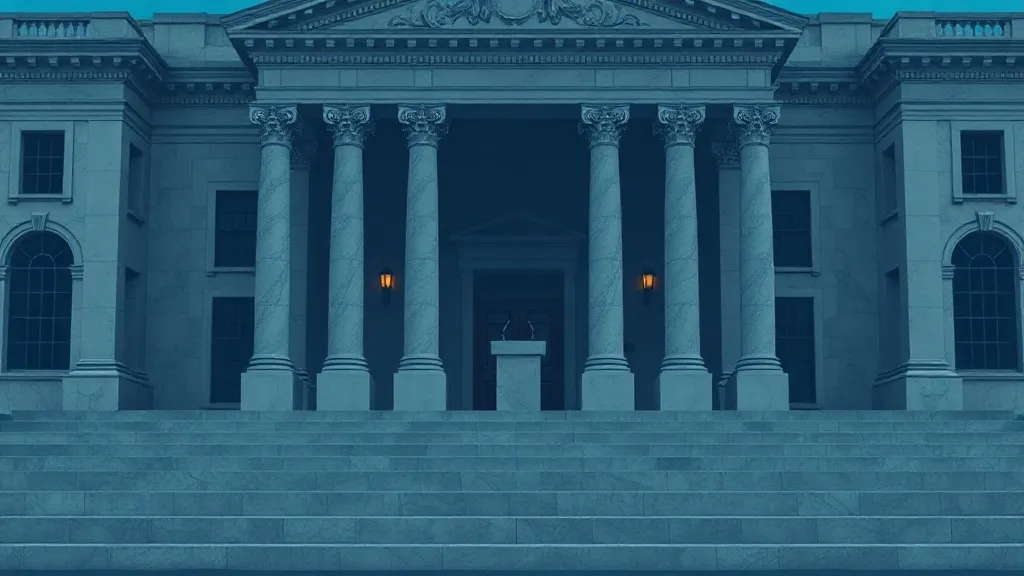
Former intelligence officer David Grusch joined a bipartisan group of House members on the Capitol steps on June 9, calling on President Trump to waive UAP whistleblower NDAs and advance stalled disclosure legislation.
A bipartisan coalition of U.S. House members and former intelligence officer David Grusch gathered on the steps of the U.S. Capitol on June 9, 2026, to demand that President Donald Trump waive non-disclosure agreements that prevent federal employees from speaking freely about unidentified anomalous phenomena - and to renew calls for legislation that would extend whistleblower protections to a broader class of UAP witnesses.
The event represents the most coordinated public pressure campaign for UAP disclosure since Grusch first testified before Congress in 2023, and comes roughly one month after the Department of War began publishing declassified UAP records under its PURSUE programme.
Who Was There, and What They Demanded
The press conference, organised by investigative journalist Leslie Kean and documentary filmmaker James Fox, drew Representatives Anna Paulina Luna (R-Fla.), Tim Burchett (R-Tenn.), Eric Burlison (R-Mo.), and Jared Moskowitz (D-Fla.) - a mix of Republican and Democratic members who have been among the most active voices on UAP oversight in the current Congress.
Representative Luna called on the White House to grant formal immunity to whistleblowers prepared to come forward with information about “the locations of UFOs and advanced technology,” according to reporting by multiple network affiliates. Representative Burlison echoed the request, calling on Trump to issue a blanket waiver of UAP-related non-disclosure agreements for current and former government employees and contractors. “Political appointees have not complied with the disclosure law,” Grusch told reporters, according to The Hill.
The group also urged Congress to advance the UAP Whistleblower Protection Act, introduced by Burchett and Luna, which would add UAP-specific provisions to existing federal whistleblower protection statutes. If enacted, the act would enable individuals to report information on government spending and classification procedures related to UAP without risking professional retaliation - addressing a gap that advocates say continues to deter potential sources despite existing protections on the books.
The Legislative Context
The UAP Whistleblower Protection Act builds on provisions established in the fiscal year 2023 National Defence Authorization Act, which created authorised channels for government employees, service members, and contractors to share UAP-related information with Congress, the Inspector General, and the All-domain Anomaly Resolution Office (AARO). The fiscal year 2026 NDAA, enacted in December 2025, added further disclosure requirements - including agency-level record review timelines and a general requirement for disclosure within 25 years of record creation, subject to presidential exception.
Advocates have argued those measures are still inadequate in practice. The core concern, as DefenseScoop has reported in its coverage of ongoing disclosure hearings, is that pre-existing NDAs signed by cleared personnel may not be fully superseded by the newer statutory protections - leaving a class of potential witnesses in legal ambiguity about what they can say, to whom, and under what circumstances. The immunity request at the Capitol event is directed precisely at that gap.
Grusch’s Claims and Their Standing
Grusch repeated prior assertions at the press conference, telling reporters the government is aware of what he characterised as “several” varieties of non-human intelligence, ranging in complexity. His claims have not been independently verified and were not corroborated in the PURSUE file releases published by the Department of War on May 8 and May 22, 2026. Pentagon officials stated across both releases that none of the material provides confirmation of extraterrestrial origin or advanced non-human technology, and AARO said it has “found no evidence linking any recorded UAP to alien activity.”
Grusch first made comparable claims under oath before a congressional subcommittee in July 2023. An AARO historical review completed in 2024 found no verifiable evidence that the U.S. government has possessed extraterrestrial technology or conducted programmes to reverse-engineer it. Grusch’s claims remain unsubstantiated in the public record; he has consistently stated that the supporting evidence is classified.
Why This Push, and Why Now
The June 9 press conference represents the latest escalation in a sustained campaign that has grown more organised as the PURSUE programme’s releases have failed to satisfy transparency advocates. Several of the lawmakers present have said publicly that the most sensitive materials may not reside in official government files at all - a concern that motivated Representative Burlison’s May 2026 demand that MITRE Corporation, a federally funded defence contractor, search its archives for UAP records dating to 1930. MITRE has confirmed it is conducting that review.
The PURSUE portal at war.gov/ufo had recorded over one billion public visits by late May 2026, indicating the scale of public interest. But critics - including several of the lawmakers at Tuesday’s event - have argued that volume does not equal revelation, and that the absence of imagery from the 2023 North American shootdowns and other sensitive incidents suggests the releases remain selective.
What Comes Next
Whether the NDA waiver request will receive a formal White House response is uncertain. President Trump signed the executive order establishing PURSUE in February 2026 and has publicly framed the file releases as a transparency achievement, but his administration has not commented publicly on the immunity question. The House Committee on Oversight and Government Reform has scheduled a hearing on UAP transparency, according to Representative Luna’s office, with a stated focus on “restoring public trust” through additional disclosure. A third tranche of PURSUE files is also expected as the review process continues.
What the June 9 event makes clear is that the disclosure campaign has moved beyond waiting for scheduled releases. Lawmakers and advocates are now explicitly targeting the administrative mechanisms - NDAs, classification authorities, contractor networks - that they believe are keeping the fuller picture from public view.