A committee including a former NASA senior official and the first Chief Scientist of the Pentagon's UAP unit will use AI to mine NASA's public archive - acting on a 2023 NASA recommendation no government agency had yet implemented.
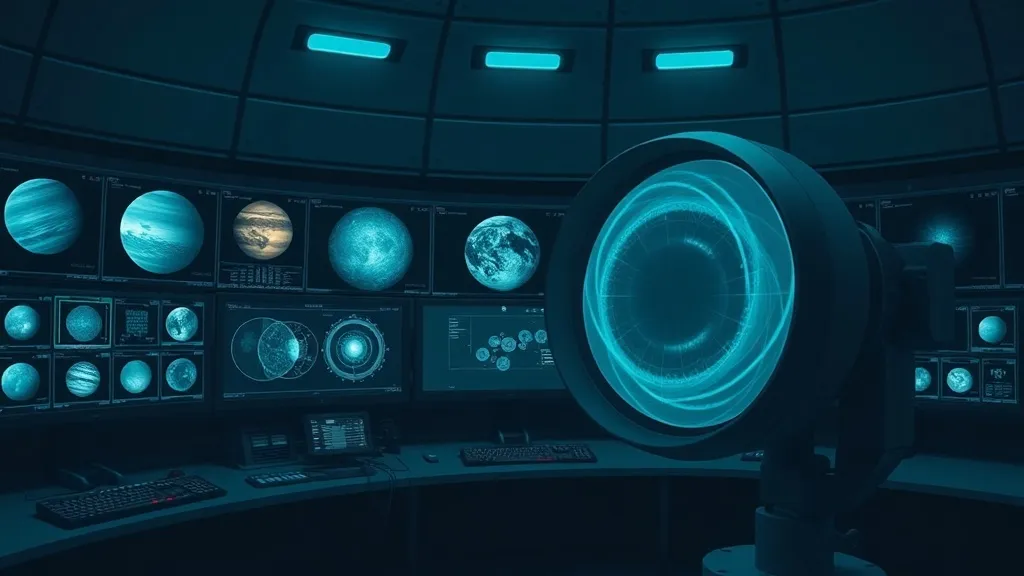
Sixty years of NASA data - planetary photographs, telescope observations, Apollo mission footage, atmospheric readings, spectrographs from dozens of missions spanning every major era of space exploration - sit in publicly accessible archives. The files are open to anyone. What they have never been, as far as anyone can document, is the subject of a systematic search built around a single question: is there anything in here that should not be there?
A credentialed committee of scientists and former government officials is about to start asking.
On June 24, 2026, the Disclosure Foundation - a nonpartisan nonprofit that organized last month’s bipartisan Capitol Hill UAP forum - announced it will conduct a systematic, AI-assisted review of NASA’s publicly available data and imagery for evidence of unidentified anomalous phenomena. The committee’s first virtual meeting followed the announcement immediately. Its first in-person working session is scheduled for this month.
The effort is not a government initiative. It is a voluntary, privately organized undertaking by people who have held government roles but are now acting independently. That distinction matters for what they can do and how: they are not bound by classification constraints, they can move faster than a federal program, and they will publish their results openly.
Who Is Searching
The committee’s credentials are substantive. Mike Gold served as NASA’s Associate Administrator for Space Policy and Partnerships, one of the agency’s most senior roles, overseeing international agreements and commercial partnerships across NASA programs. He also served on the 2023 NASA UAP Independent Study Team - the 16-scientist panel NASA assembled at congressional request to assess how the agency should approach UAP research.
Dr. Travis Taylor is an astrophysicist and aerospace engineer who served as the first Chief Scientist of the original Pentagon UAP Task Force, the predecessor organization to AARO (the All-domain Anomaly Resolution Office, the Pentagon’s current UAP office). Taylor brings direct institutional knowledge of how government UAP investigations have historically been conducted and what their data gaps look like.
Dr. Reggie Brothers, the former Under Secretary for Science and Technology at the Department of Homeland Security, rounds out the senior government-credentials tier. He, too, served on the 2023 NASA UAP study panel. Alongside them: astronomer Dr. Beatriz Villarroel, theoretical physicist Dr. Maaneli Derakhshani, biomedical researcher Dr. Stephen Bruehl, and Jordan Flowers, the Disclosure Foundation’s executive director.
What a 2023 NASA Report Recommended
The committee’s effort is not a response to rumor or advocacy. It is a response to a documented, signed recommendation from a NASA-assembled scientific panel.
The NASA UAP Independent Study Team’s September 2023 final report concluded that the space agency possesses “rich datasets” collected from scientific instruments that have never been specifically examined for anomalous phenomena. The panel recommended that NASA pursue a systematic review of its archival data with UAP detection in mind, using modern machine-learning tools where feasible. The report was unambiguous: the data exists, the methodology exists, and the systematic search had not been done.
More than two and a half years passed. No government entity moved to implement the recommendation.
“Anomalies are what drive scientific progress,” Gold said in a statement accompanying the announcement. “We are going to do our best to implement the recommendations” from the 2023 study.
The Scope of the Archive
NASA’s publicly accessible data holdings are large by any measure. The Planetary Data System alone contains petabytes of imagery and instrument readings from dozens of missions - Mars rovers, the Cassini Saturn orbiter, Voyager 1 and 2, Galileo’s Jupiter flybys, the Hubble Space Telescope, and the James Webb Space Telescope. Missions from the 1960s and 1970s produced photographic archives that were never processed through modern anomaly-detection software because the software did not exist at the time.
The Disclosure Foundation committee has not published a specific target list or methodology. What it has said is that the review will use artificial intelligence and machine learning to identify anomalies in NASA’s public imagery and data - patterns, objects, or signals that fall outside what the relevant instrument would be expected to record - and that citizen science volunteers and voluntary corporate contributions will also be incorporated.
Findings will be shared publicly and with any interested federal or state government entities.
Why NASA’s Data?
The committee’s announcement cited polling indicating that NASA is the most trusted federal entity on UAP-related questions - more trusted than AARO, the intelligence community, or the Department of Defense. That trust is partly built on NASA’s scientific reputation, and partly on the simple fact that its archive is public: any result the committee reports can in principle be reproduced and checked by an independent party who downloads the same data.
The 2023 NASA panel made the same observation. Its core argument was not that anyone had found evidence of something anomalous in NASA’s holdings. It was that a rigorous search had never been done, and that data gathered for other purposes - charting planetary surfaces, measuring atmospheric chemistry, cataloguing stars - might carry anomalies in the margin that no one had looked for.
For six decades, spacecraft cameras and spectrometers have captured what they were pointed at. Whether something else occasionally appeared in frame is a question that, until now, no one had attempted to answer at scale.
The team’s first in-person meeting is this month.